Archive / News

RSS feed for this section

An Interview with E. Catherine Tobler

Sean recently chatted with E. Catherine Tobler, author of the wildly entertaining Folley & Mallory Adventures as well as a number of our favorite short stories. Here’s what transpired.

What do you think the role of genre is in fiction?

I’m not certain what true purpose genre has beyond acting as a guideline for the reader, maybe–though the more I read, the less I’m convinced of “genre,” as bits of one tend to end up in another, and work out perfectly fine. As a writer, the same is true for me; why not use whatever you like in whatever “genre” they think you’re writing?

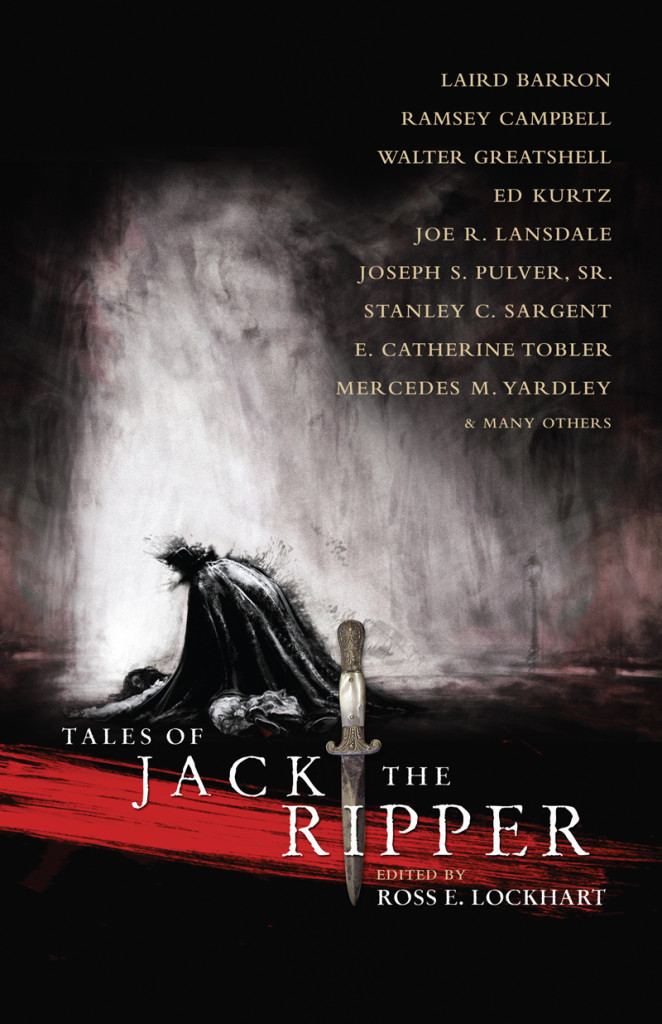
Tales of Jack the Ripper edited by Ross E. Lockhart

Your story from Tales of Jack the Ripper, what was the genesis of it?

“Once, November,” came pretty easy, because I wanted to take a route I didn’t think anyone else would. I suspected authors would write about the Ripper–and rightly so–but I wanted to explore his victims–who they were even after their violent deaths; I hope I’ve done them justice in some small way.

Do you find that you work quickly, slowly, or a little of both?

It depends entirely on what I’m working on; writers are surely some of the finest procrastinators on the planet. A good work ethic is important to me–maybe it’s doubly important when you’re your own boss. No one is looking over your shoulder, so if you don’t get the work done, the work doesn’t get done. And I can’t stand that. So we get it done–usually ahead of schedule.

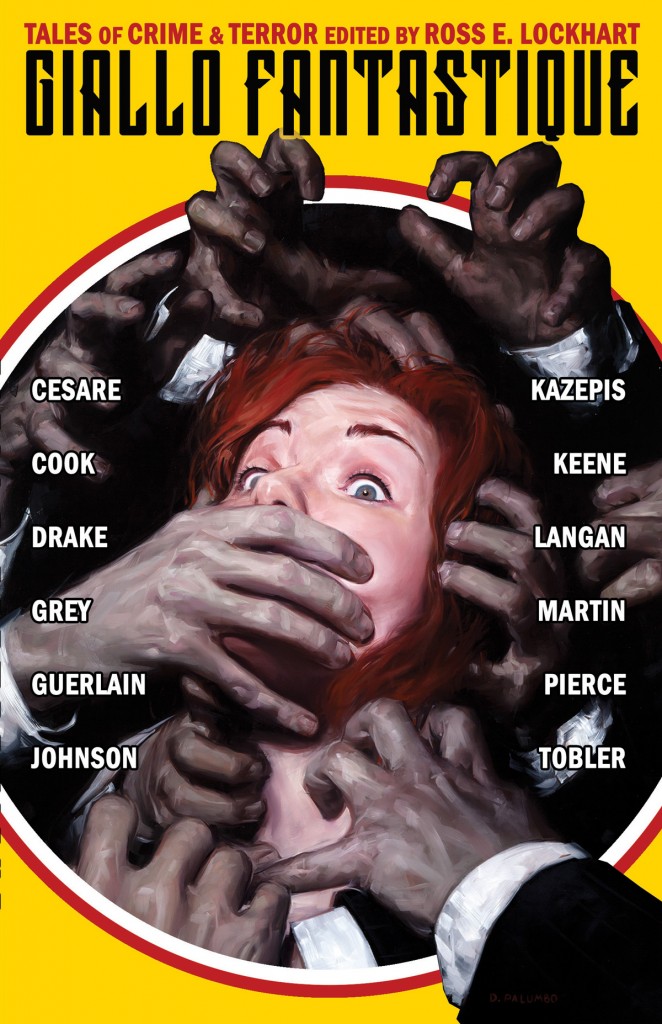
Giallo Fantastique edited by Ross E. Lockhart

What’s the scariest thing you’ve ever read?

Lately, the daily news. In terms of fiction, I think my answer will change depending on when I’m asked. Presently, I’d say “The Yellow Wallpaper,” by Charlotte Perkins Gilman and The Handmaid’s Tale, by Margaret Atwood. Both contain a horror that is timeless–and possibly not much different from the daily news these days…

What’s the longest you’ve ever edited a piece for?

Sometimes, stories don’t come so easily. I had an idea for one that actually took me eleven years to get right–so that’s probably the longest. It wasn’t that I actively edited or pursued it during those years, however. I wrote the draft, and knew it wasn’t right, but the idea of it still wouldn’t leave me alone. So every now and then we’d talk over coffee and see if we learned anything new about each other. Eventually, we came to terms and it sold to a pro market.

What did you enjoy about working with Ross as an editor?

I’ve worked with Ross on two projects now, Tales of Jack the Ripper, and Giallo Fantastique. Both times he was very welcoming and open to whatever this writer wanted to do. Also, his beer reviews and hair are complete perks.

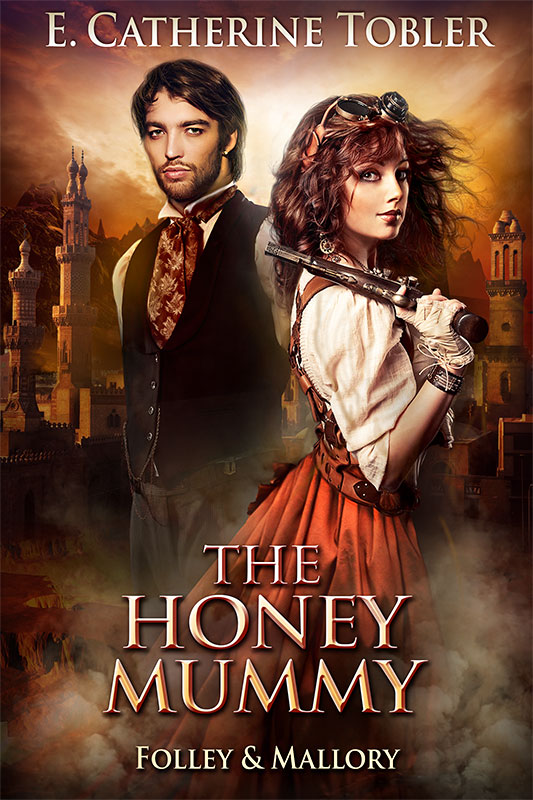
honey_promo

Got anything to plug?

The Honey Mummy, the third book in the Folley & Mallory Adventures, is out now, with the fourth volume out this coming fall. My circus novel, The Kraken Sea, is out this June from Apex Book Company. Short fiction is soon to appear again in both Interzone and Clarkesworld.

A New Interview with Nicole Cushing

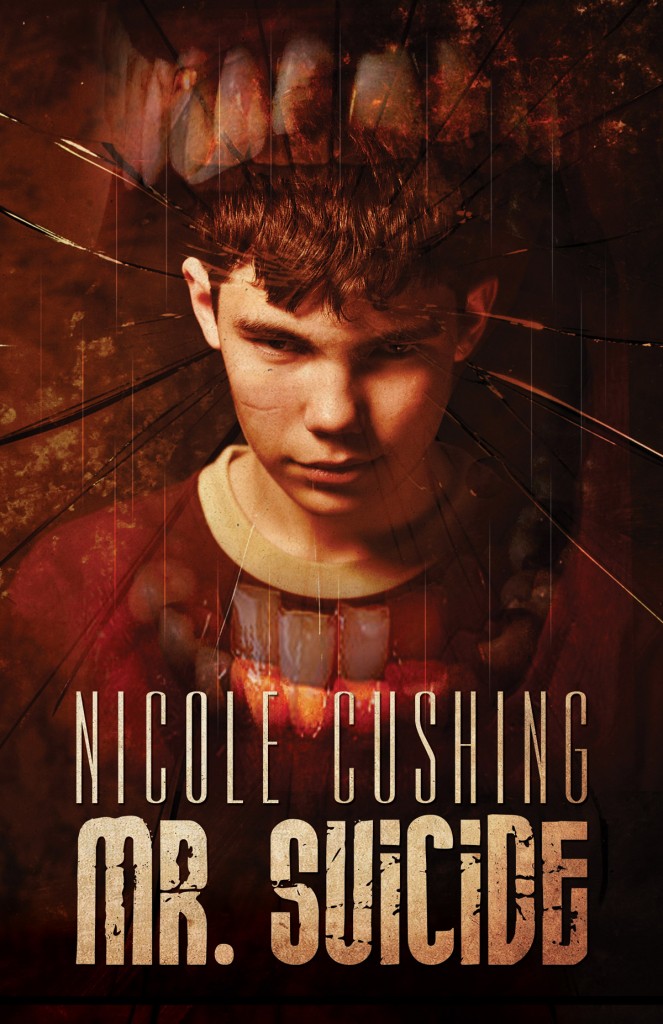
When the news broke last week that Nicole Cushing had been nominated for the Bram Stoker Award in two categories, for her Word Horde debut novel Mr. Suicide and her Cycatrix Press collection The Mirrors, we knew it was time for a new interview. So here’s Sean, talking to Nicole about transgressive horror, awards, writing one of the best books of 2015, and more…

Do you think that works of transgressive horror tend to get less acclaim due to their shocking elements?

It depends on who’s bestowing the accolades.

I think I’ve been given a fair shake by most of the reviewers who’ve chosen to talk about Mr. Suicide. Peter Tennant of Black Static, Frank Michaels Errington at Cemetery Dance, Nick Cato at The Horror Fiction Review, and George Anderson at Ginger Nuts of Horror all mentioned Mr. Suicide on their lists of the best books of 2015.

But sure, there will always be readers, reviewers, editors and critics who will clutch their proverbial pearls when faced with a book like Mr. Suicide. If everyone liked it, then–by definition–it wouldn’t be transgressive.

Mr. Suicide by Nicole Cushing

Do you think Mr. Suicide is too controversial for The Stokers?

There’s no way for me to answer that question impartially. That question is better answered by readers, reviewers, bloggers, and the voting membership of HWA.

I will say this, though. The very fact that the book garnered a nomination is encouraging. I also take heart from the fact that just last year, the HWA bestowed a lifetime achievement award on Jack Ketchum. So this is an organization that’s open to honoring controversial authors.

What do you think the role of genre is in fiction?

Genre labels are there to help readers find writers and vise-versa. And, if that’s how the labels are used, I’m cool with them.They only become a problem when they devolve into dismissive stereotypes.

Do you work slow or fast?

It depends on how we define the terms. On the one hand, I think I’ve managed to be reasonably prolific over the last year or two. On the other hand, I’ll likely never be one of those authors who can routinely write three thousand words a day.

I’m a little too obsessive for that. The words don’t have to sound pretty, but the sentences do (if that makes any sense). I want the sentences to have the right rhythm, and that takes time.

So I’m a tortoise, slow but steady. I usually can get in around 1200-1700 words a day, when things are going well. Towards the end of a project I find I build momentum and might routinely do 2,000 words a day. But sometimes I have to spend time on the business end of the job and I get very little written.

Do you have any writing rituals?

Rituals? No. Habits? Yes.

I’ve taken to writing on my laptop while slumped down in my comfy office chair with my feet propped up on a piece of luggage I use as a makeshift ottoman. I have terrible posture and probably look like a loon, while writing.

What do you hope to achieve with your fiction? What emotions do you want to elicit?

When someone reads one of my books, I want them to experience an altered state of consciousness. I want them to experience a waking nightmare that is both weird and utterly convincing. I obviously want this altered state of consciousness to be temporary and voluntary (the reader can always stop it by putting the book down). But I want the ride to be intense, because my life experiences have been intense and intensity seems more honest than coziness.

I’m a traumatized person. To some degree, an alienated person. I’ve had more than my share of intense emotional ups and downs. All of these facts shape how I look at the world. I suspect that the readers who feel a strong connection with my work are those who can relate to what it’s like to be traumatized, alienated, or intensely emotional. Either they’ve lived a life with similar issues, or they know people who have.

Quiet, subtle horror has its place, but I don’t want to write fiction that’s gentrified or predictable. I like juxtaposing stretches of quiet horror against moments of graphic horror and moments of graphic horror against moments of absurdity. I feel a novel is a large canvas, so there’s room for all of these approaches.

In that way, a horror novel can be a bit like a symphony. If you listen to a Shostakovich symphony, for example, you hear that his work isn’t all loud, or all quiet. He juxtaposes stretches of quiet, introspective strings against blasts of monstrous horns and the throbbing of monstrous drums. (A perfect example of this is the final six minutes of the Fourth.) I dedicated Mr. Suicide to another Russian composer, Alfred Schnittke, who possibly went even further than Shostakovich in advancing a so-called “polystylistic” approach. As ridiculous as it may sound to those who think transgressive horror is for boors, Schnittke’s Concerto Grosso No. 1 was an inspiration for the polystylism of Mr. Suicide.

Got any pluggy-wugs?

Four, but I’ll make them quick.

First, I want to encourage readers to check out my Youtube channel. I’ve recently started a series of brief (five minute long) videos called Forgotten Lore. Each week I discuss an unjustly-forgotten work of dark fiction from an author who is no longer with us. It’s a labor of love and I’m having a lot of fun with it.

Second, I want to mention that my short story collection, The Mirrors (Cycatrix Press), was also nominated for a Bram Stoker Award. It’s available at Amazon, directly through Cycatrix Press, and at a couple brick and mortar bookstores.

Third, I want to share the news that my next book, The Sadist’s Bible, will be coming out in April from 01 Publishing. You can pre-order from Amazon now.This is a novella weighing in at about 30,000 words. Readers who enjoyed Mr. Suicide will probably dig this one, as well.

And speaking of Mr. Suicide, I should mention that–to celebrate the Bram Stoker Award nomination–Word Horde is taking two bucks off the price of the Kindle edition. It was $4.99 and is now $2.99. It also appears (as I write this) that Amazon has taken ten percent off the price of the paperback So if you’ve been on the fence about buying it, now’s a good time to go ahead.

Still on the fence? Check out this recent review of Mr. Suicide at The Conqueror Weird, in which reviewer Brian O’Connell calls Mr. Suicide “…one of the greatest novels ever written.”

Review Round-Up: Furnace, by Livia Llewellyn

We started this week with an interview with Livia Llewellyn, celebrating the release of her Word Horde collection, Furnace. So it seems fitting to close out this week with more Furnace, and a quick showcase of some of the rave reviews the book has received so far.

Furnace by Livia Llewellyn

The first review of Furnace to hit was at The Conqueror Weird. In it, reviewer Brian O’Connell calls Livia Llewellyn “a master of the horror genre.” O’Connell examines several stories in depth, and ends on a rhetorical question: “Do you see why Furnace is such a masterpiece, such a triumph? It brings to light things we SHOULD be talking about but are too afraid to touch in beautiful prose, in stark brutality, in blood and filth. And, if you look under the billions of layers you can search through in these amazing stories, you will find the beauty in horror.”

The second review of Furnace to hit was at NPR Books, wherein reviewer Jason Heller describes Furnace as “Beautiful and hideous in the same breath, its 13 tales of erotic, surreal, existential horror pack a logic-shattering punch. […] Llewellyn is steeped in the eerie tradition of H.P. Lovecraft and Thomas Ligotti, and a sympathetic sense of dislocation and dread permeates Furnace.” Heller concludes his review describing Furnace as “near to bursting with blood and shadow and dust, with horror and wonder.”

The third review we’re featuring today comes from D. F. Lewis, who is live-blogging the stories in a particularly esoteric manner at The Dreamcatcher of Books. These are reviews that do not lend themselves easily to pull quotes; however, those readers with a taste for the arcane and orphic are encouraged to click through and enjoy.

Have you written a review of Furnace? Let us know!

Update: Publishers Weekly weighs in: “Llewellyn’s second short story collection (after Engines of Desire) showcases her assured writing with compelling and involving tales of horror, often concerning the particular horrors of being female. Llewellyn skillfully incorporates Lovecraft, science fantasy, and classic Greek and Celtic mythology into fresh new narratives. […] Llewellyn’s lush vocabulary and sense of place combine with her ability to imbue her characters with distinctive voices and make her a notable contributor to the field.”

Cover Reveal: The Lure of Devouring Light

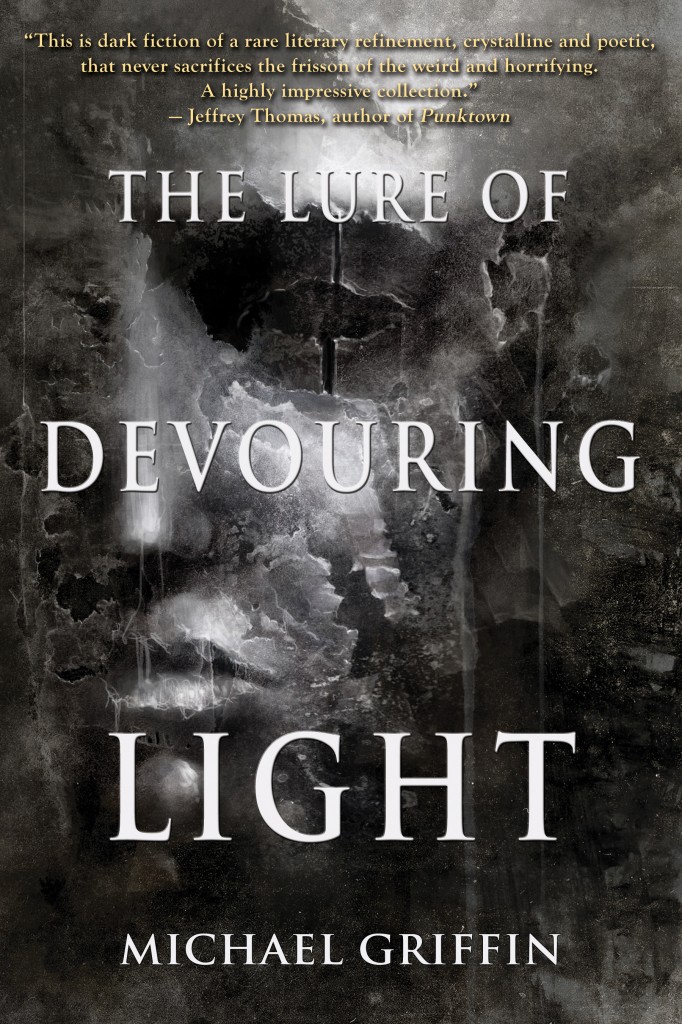
We are pleased to reveal the cover to Michael Griffin‘s The Lure of Devouring Light, which Word Horde will be publishing in April. This cover features artwork by Jarek Kubicki and design by Scott R Jones, and if you like what you see on the outside, just wait until you have a chance to dig in to the inside. Preorders are now open.

LoDL_frontcover_004

Over the last few years, Michael Griffin has been heralded by critics as an author of breathtaking skill, melding the aesthetics of quiet horror, dreamlike wonder, and the strangeness inherent in the classical weird. Readers have sought his stories, scattered throughout prestigious anthologies, magazines, and limited-edition chapbooks, hoping to assemble their own collections of Griffin’s ferocious, poetic fiction.

Now, Word Horde presents Michael Griffin’s debut collection, The Lure of Devouring Light. Here you will find strange and luminous tales, character-driven, emotionally resonant, and grappling with horrors both everyday and supernatural.

Experience for yourself The Lure of Devouring Light.

An Interview with Livia Llewellyn

Livia Llewellyn‘s brand-new collection, Furnace, drops this week, and we couldn’t be more excited. The first review of the book hit over at The Conqueror Weird last Thursday. Spoiler alert: It’s a rave one! So we figured we’d bring you something special this week to celebrate. Here’s an exclusive interview with Livia, conducted by our own Sean M. Thompson…

What do you feel the role of genre is in fiction?

I honestly don’t know. It’s really just a device the writer uses to help tell the story. I know, I know, it’s a marketing device used by the publishing and bookselling industries to target customers and create more sales, but it’s also a reflection of the writer. Beyond that, I couldn’t say – it’s not something I think about, because I honestly don’t care.

When you’re putting together a collection, do you view it as like an album, or do you have another analog?

I do see it very much as like putting together an album. Each piece of fiction or song is a story unto itself, but the entire collection or album is also a story, an emotional narrative that you want the listener or reader to experience. You want them to come away thinking that they went through something, that it was a journey with a beginning and an ending, not just a random jumble of art. So your first piece has to be saying something very specific, it has to invite them in, give them a taste of what’s to come but not send them off in the wrong direction altogether; and then as you go through the collection, you put stories together that maybe have similar themes or settings, you have an interlude or two where your reader can catch their breath with a piece that isn’t quite the same as the rest, and then you have a final stretch of your most intense work, ending with the story that you hope (I hope, anyway) encapsulates all of the themes of the entire work and leaves the reader in an emotional place that hopefully isn’t the same as where they were at the beginning. The best albums have that ability to guide listeners through that kind of an artistic and emotional journey, and so do the best collections and anthologies. I can only hope that Furnace can do the same. Time will tell.
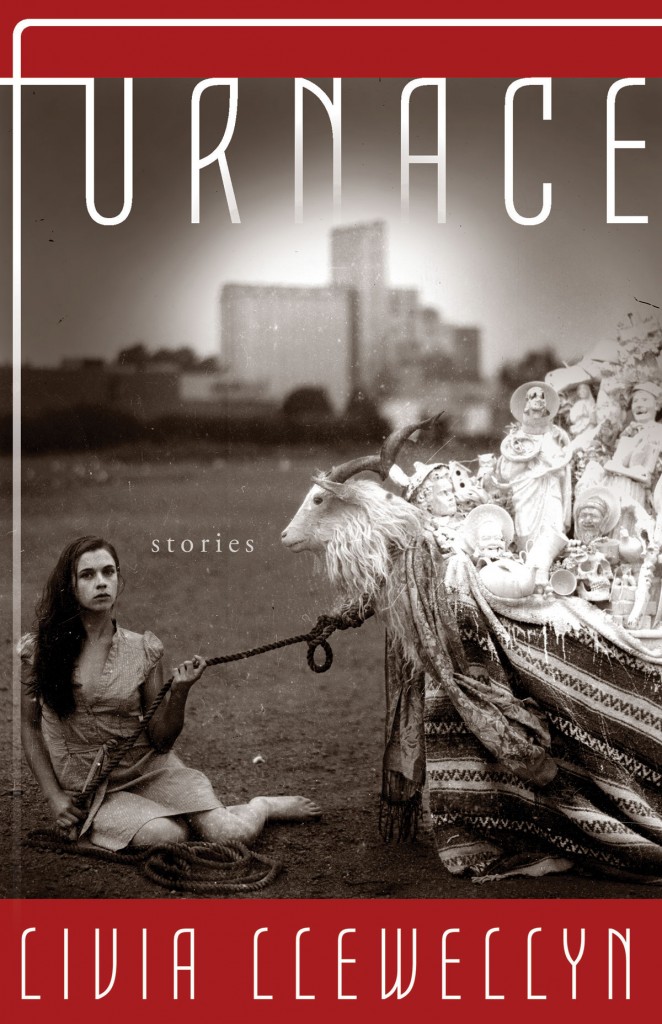
Furnace by Livia Llewellyn

Do you have cats that tend to hover around you while you try to write? (asking, uh, for a friend, (get out of here kitty-))

I can’t afford a cat on my salary, but if I ever do get to the point where I can have an animal in my life, it’ll be a dog.

You seem to be pretty up front about the fact you don’t consider yourself a weird fiction writer. Do you think the label of being “weird” is kind of like tacking on that a horror film is a “thriller” when it starts to do well, or do you genuinely think the weird is its own thing?

I think weird fiction is genuinely its own thing – I just don’t think that I write enough of it to be called a weird fiction writer, anymore than I should be called a Lovecraftian writer. My writing branches off into so many areas that I think “dark fiction writer” is a better umbrella for me to stand under.

Your last collection was Engines of Desire, and your new one is Furnace. What is about imagery with machinery that you find yourself drawn to, or does it just make for a cool-sounding story collection?

It didn’t occur to me until this question that I have two collections with machinery in their titles. That’s interesting – I have no idea what it means. Since I was very young, I’ve found engines and machinery fascinating and alien and exciting, but I think I’d need a psychiatrist to tell me why. I don’t really need to know why. Maybe in twenty years I’ll look back at my body of work and the light bulb will go on, but until then, I’m happy to work it out in my writing.
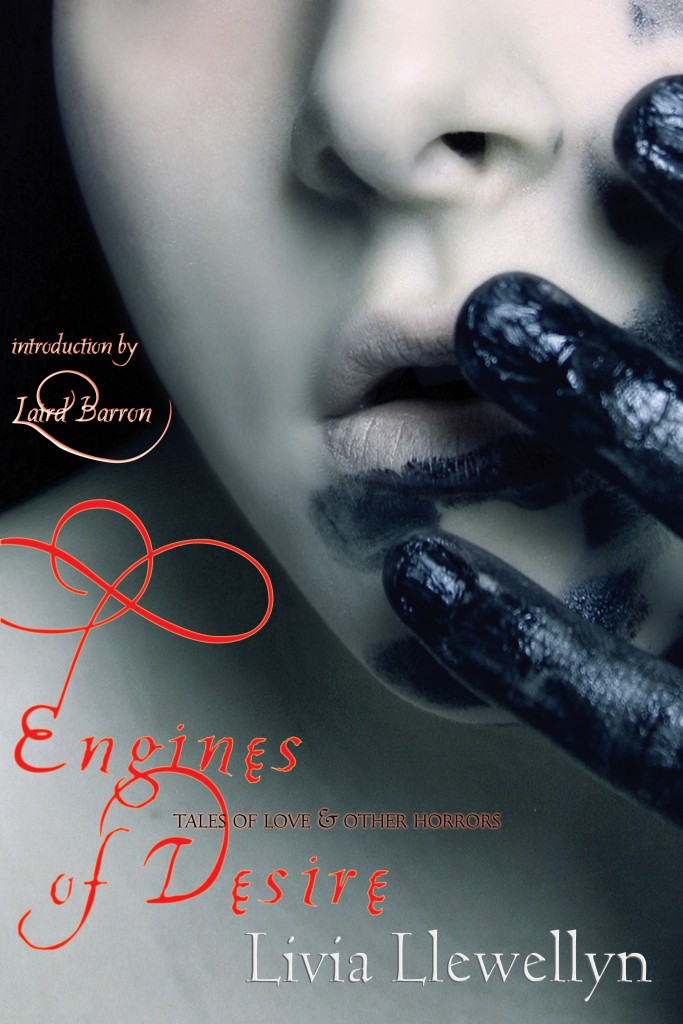
High-Res-EoD-Cover

Do you have a set amount of time you usually can write for before you have to take a break?

I can write for maybe ninety minutes before my mind starts to wander. But in my defense, I’m usually writing in the evening, after an 8-10 hour work day, so I’m already tired and a bit frazzled to start with – ninety minutes on weekdays is my limit because I need at least part of the evening to wind down by reading or working out or just listening to music and staring into space. On weekends, I write maybe three hours at a stretch, and then I have to walk away from the computer screen to recharge my batteries.

Coffee, tea, or the lightning juice?

When I’m writing, I prefer either coffee or tea, depending on the time of day. I really don’t like to drink when I’m writing – alcohol makes me lose my concentration, so I save that for after I’ve finished for the day.

Would you ever write a science fiction novel, fantasy novel, anything like that? Or do you just start a story, and whatever it is, it is?

Do you mean story? I’ve never even managed to finish writing a horror novel, let alone a novel in any other genre – but as for stories, I do tend to just start writing and not worry about what genre it is. I have no interest in writing SF or Game of Thrones-style fantasy, though. It’s just not my thing. I suppose if I ever did, the science fiction would look a lot like Alien or Event Horizon, and the fantasy would look like… Alien vs. Conan, which is not a real movie but absolutely should be.

My cousins live in Long Island. (Oh shit, wait, that wasn’t a question.)

You’re still in NYC, how’s that going? Has anyone at Starbucks really f-ed up your name again?

I’m not a big fan of the big city – I’d really prefer to be in a smaller city somewhere near mountains – the cultural experiences here are amazing, but the housing situation is something of a nightmare (for anyone who’s not quite wealthy, that is), which makes it a constantly depressing and demoralizing situation for me. But the job is here, and my friends are all here, so until I can retire, I cope as best I can. And, I’ve largely stopped going to Starbucks for coffee. I did enjoy the very creative misspellings of my name (Libba, Navan, Lil’diq), but the coffee is way overpriced, and more and more the baristas were getting my orders wrong and then treating me like shit when I complained. We get free lattes and cappuccinos at work, so I just make my own coffee and misspell my own name nowadays. Hello, Liveria!

Your prose hits like a lead pipe to the teeth. Do you ever write anything, and go “oh, whoa, I should probably tone this down a bit.”?

Yes, I’ve thought that a couple of times. Whenever I have that reaction, it’s not because I think I’ve gone over the line, but because I think I’ve gone over the line for the intended market. I do have to take into consideration the anthology or magazine, and what kind of audience the editor is targeting with my and the other contributors’ stories. A number of stories in Furnace are quite sexually explicit or graphic in their depictions of the female body, and I thought perhaps they might be rejected. Amazingly, they weren’t. The editors probably knew readers would just skip over my story, so it didn’t matter that they weren’t appropriate – most people pick up anthologies for the much bigger names! But if asked, I would certainly work with the editor to change the story, if I felt some of the content wasn’t the right fit for the market and if I felt I could make the changes without turning the story into something I wasn’t happy with. I’ve had to completely tear apart stories before, and it’s always a bit painful, but the end results have so far resulted in much better stories.

Thanks for taking part in the interview. Please, tell our fine readers what they have to look forward to from you, in this, the dawning of the age of Word Hordius.

I have a number of short stories that will be coming out later this year and in 2017. I’m also in the middle of putting together a collection of extremely fantastical and dark erotic stories over on Patreon, called Tales of the Dark Century – that should be finished this year, but I honestly don’t know if I’ll find a publisher for it, as it’s definitely not the kind of erotica that currently popular. Maybe Chuck Tingle can give me some self-publishing tips…
An Interview with Mercedes M. Yardley

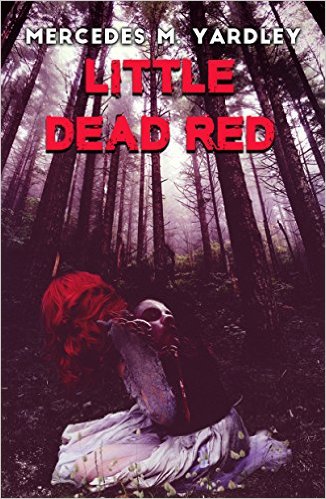
To kick off Women in Horror Month (which we’re totally using as an excuse to talk about a number of the awesome authors we work with… not that we need an excuse), Sean talks with Mercedes M. Yardley, an author who appeared in the Word Horde anthology Tales of Jack the Ripper. In addition to being the author of Pretty Little Dead Girls: A Novel of Murder and Whimsy and Nameless, her novella Little Dead Red currently appears on the 2015 Bram Stoker Awards Preliminary Ballot (you’re definitely going to want to read this one). Take it away, Sean and Mercedes…

What do you feel the purpose of genre is in fiction?

MMY: Genre is about marketing, straight-up. It tells the bookstore which shelf to place the book on. It gives the reader a good idea where to start looking for something that will interest them. I think it has very little to do with a good story. Most stories are more than one genre. I have a book that is a serial killer thriller romance with heavy horror and surrealism. I usually just say it’s a fairytale with a high body count, because it’s simpler. Genre is a categorizing tool to help organization.

Tales of Jack the Ripper edited by Ross E. Lockhart

You have a story in Tales of Jack the Ripper, “A Pretty for Polly.” What inspired you to write the story, and what was it like working with Ross as an editor?

MMY: I was over the moon when I was invited to that anthology. Jack the Ripper is my jam. I challenged myself to see if I could make Saucy Jack, who is arguably the most heinous and notorious killer of all time, come off as sympathetic. How do you do that without neutering the legend? I did my best and I’m pleased with the result. It’s a dark little thing.

Ross is a very cool editor. Professional, yet laid-back. He has a strong reputation for quality work and deservedly so. I’d work with him again in a heartbeat.

You seem to enjoy whimsy? Is that a fair assessment?

MMY: Absolutely. I call my work “whimsical horror.” I think it’s apt. Pretty, quirky, whimsical things are what make the world go round.

Does your environment alter the settings in your stories?

MMY: It really does alter my settings. I grew up in the desert, so I write quite a bit about that. But my heart is in the Pacific Northwest, so that’s the setting of at least two of my books. I find that if it’s raining outside, I’ll write about rain. If it’s windy, I’ll write about that. It helps to have whatever is influencing my day show up in my work because it gives the stories diversity. It isn’t always daytime, it isn’t always sunny, etc.

Do you write in the morning, at night, or neither?

MMY: Ideally I’m a night writer. That’s when I’m naturally most creative. But unfortunately, that’s also when I’m the most exhausted and I want to kick back and veg. It’s a struggle for me to be disciplined enough to turn off Grimm and work on a book. But ultimately, that’s when my best writing is done.

LittleDeadRed

What inspires you?

MMY: I’m inspired by beauty. I’m also inspired by ugliness and rot. It’s amazing how closely beauty and horror are intertwined. Strength and suffering. I’m inspired by finding the gems in ordinary, everyday things. It adds sparkle to the mundane.

Thanks.

MMY: Thanks for having me! It was a pleasure.

Livia Llewellyn’s Furnace cover reveal, preorders now open on two 2016 Word Horde books

We are pleased to reveal the cover to Livia Llewellyn’s collection Furnace, which we will be publishing in February. We are now accepting preorders for Furnace.

Furnace by Livia Llewellyn

Horror fiction has long celebrated and explored the twin engines driving human existence. Call them what you like: Sex and Death, Love and Destruction, Temptation and Terror. While many may strive to reach the extremes, few authors manage to find the beauty that rests in the liminal space between these polar forces, the shuddering ecstasy encased within the shock. And then there’s Livia Llewellyn, an author praised for her dark, stirring, evocative prose and disturbing, personal narratives.

Lush, layered, multifaceted, and elegant, the thirteen tales comprising Furnace showcase why Livia Llewellyn has been lauded by scholars and fans of weird fiction alike, and why she has been nominated multiple times for the Shirley Jackson Award and included in year’s best anthologies. These are exquisite stories, of beauty and cruelty, of pleasure and pain, of hunger, and of sharp teeth sinking into tender flesh.

Also now available for preorder (though the cover isn’t quite ready to show off yet) is Michael Griffin’s The Lure of Devouring Light, which we will be publishing in April. If you love short fiction like we love short fiction, 2016 is going to be your year!

Over the last few years, Michael Griffin has been heralded by critics as an author of breathtaking skill, melding the aesthetics of quiet horror, dreamlike wonder, and the strangeness inherent in the classical weird. Readers have sought his stories, scattered throughout prestigious anthologies, magazines, and limited-edition chapbooks, hoping to assemble their own collections of Griffin’s ferocious, poetic fiction.

Now, Word Horde presents Michael Griffin’s debut collection, The Lure of Devouring Light. Here you will find strange and luminous tales, character-driven, emotionally resonant, and grappling with horrors both everyday and supernatural.

Experience for yourself The Lure of Devouring Light.

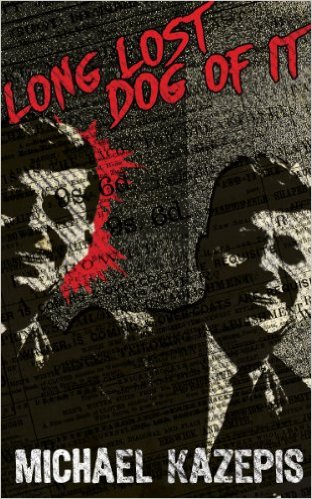
An Interview With Michael Kazepis

Sean M. Thompson recently sat down with King Shot Press head honcho (and helluva writer) Michael Kazepis to ask him a few questions. Here are the results…

What do you think the role of genre is in fiction?

I’m not sure this is a question I can unpack in a way that doesn’t make me feel like a shithead. My view is, I guess, it’s a marketing tool that can become a cage. I’ll leave it at that.

Your story from Giallo Fantastique, “Minerva” is a traditional take on the Giallo genre. What inspired you to write the story?

Is it really a traditional take? I’m seeing this response enough to think I fucked up there—I kept trying to think of ideas reminiscent of giallo that weren’t going to feel like a retread. When Ross invited me to send him something, I was trying hard to figure out a recipe to fake my way in because I’ve always wanted to work with him, and you never know if that invitation comes around again. I mean, yes, I watched Deep Red to figure out some colors to write toward. But that was the extent of my research in the genre. Julio Cortazar’s “Blow-Up” gets riffed heavily. The character of Detective Halkias is a more serious take on Casey from Lloyd Kaufman’s Terror Firmer. I think the cinema sequence was informed by Godard’s Masculin, féminin—that Bergman “film within a film.” Lynch’s Mulholland Drive was also on my mind—I really like its Rubik’s Cube narrative. The Courier’s Tragedy, too. There are lots of scenes like this in literature and film, where the main character sees a performance and it echoes the main story in subtle ways. Here, I thought it’d be kinda funny to have the protagonist, Celia Marrast, watch a stylized snuff film about her brother. Something else is, I originally intended “Minerva” to be set in Rome, but I don’t really know much about Italian culture so I brought the story home to Athens. So that’s why the location is what it is. And you know, the more I think on this question, I guess there really is an overlap between what I did and what’s come before. The failure feels vaguely Borgesian to me. Like, I ended up rewriting Don Quixote word for word, and to me it reads like some other story. I think it took about seven months to walk away from it. I can be a very slow writer. Ross was extraordinary in his patience.

Giallo Fantastique edited by Ross E. Lockhart

What themes do you find yourself coming back to in your work, if any?

Of what I’ve picked up? There are steady patterns of the unreliable witness, ruined cities, coping with parental death, amateur detectives, ghosts, godlessness, some leftist ideas. The struggle to sustain love, which is significantly more difficult than the pursuit of it. Life as a slasher film garnished with surrealism. I’ve been accused of writing all my lead characters as loners and I’ll cop to that.

Do you have any writing rituals?

It used to be that I’d take smoke breaks and long showers as ways of measuring space between writing scenes. I try not to smoke anymore. I don’t have the free time that I used to. Mostly it’s just sit and do this when I can. Coffee during the day. I’ll drink VISO at night because it’s less abrasive than coffee or an energy drink. Sometimes I’ll wake up at 3am and work when it’s quietest in the house. Today, I overslept and felt mostly unproductive. I’ve noticed that if I don’t regularly change up my diet, or where I’m working, I won’t get anything done. I get stir-crazy if everything’s continually the same. Almost four months ago, part of the middle finger of my right hand was crushed hydraulically and hasn’t healed yet—this week I was told the distal phalanx (or, fingertip, in doctor speak) doesn’t seem to be healing with the rest of the injury, so I’m presently hoping I won’t lose that part. I spent the first couple of months after the accident in a painkiller haze, and that’s set me back, in terms of schedule. Life is moving slower than I’d like it. So I haven’t had a consistent ritual in a while.

What’s your favorite Giallo film?

I haven’t watched enough of them to form an educated favorite. Recently, I liked Deep Red. As a teenager, I remember enjoying Suspiria, Tenebrae, other Argento stuff. I remember seeing a few films with David Hess in them, because I knew him from The Last House on the Left. Bava’s Bay of Blood, that.

Do you like the cold? Do you find your environment influences your writing, including the weather and the season?

I live in an old apartment that used to have baseboard heaters, but I tore them out because they smelled bad and never replaced them. I’ve got a portable radiator that I’ll occasionally plug in and that helps some. Usually I just layer up. I think some level of discomfort is essential for work to get done. Especially since it’s easier to be lazy this time of year. I find myself wanting to work from bed a lot, even knowing I’ll fall asleep. That’s a struggle because I’m already tired from working at my job and fixing things around the house. But as far as the weather goes, it’s not the being cold that bugs me, it’s the wind, when it can cut. That shit’ll split my knuckles in a day and draw blood. I end up hating the notion of going outside.

LLD

Do you have anything you’d like to tell our readers about? Special things?

There’s a novel I’ve been working on for a few years now called Nothing Crown, and it’s written like a post-apocalyptic road novel. It’s about a street kid that walks from Jerusalem to Paris to pursue rapping. Think something akin to Children of Men meets, like, Illmatic (Nas) . . . in the Levant.

I also run King Shot Press, which is a post-bizarro publisher of radical fiction. Last year, we released some really great books by Cody Goodfellow, Eric Nelson and Chris Lambert. This year, KSP is releasing Lambert’s sophomore novel, Killer Unconquered, the second part of a bigger novel-in-series. Violet LeVoit, who won the Wonderland Book Award back in November, has her debut novel coming up, I Miss The World, a Nicholson Baker-esque novel that follows two siblings through the Hollywood Forever Cemetery. November was very surprising in that Scott Nicolay, whose forthcoming book Noctuidae is part of the next batch of KSP titles, took home the World Fantasy Award the same weekend that Violet nabbed the Wonderland. His book’s about a hike through an Arizona canyon that leaves two people stranded with something very big. Lastly, there’s Troy James Weaver’s Marigold, in which a 30-something floral salesman searches for reasons to keep living.

Thanks, man.

Thank you.

This Is Horror Award nominations… and your chance to vote!

With the dawn of the new year, awards season has begun. And Word Horde has been recognized with nominations in two categories of the prestigious This Is Horror Awards. It is indeed an impressive ballot, filled with many friends of the Horde and a number of our favorite books of 2015. Now, it’s up to you to vote. Drop by the This Is Horror website, check out the full ballot, and cast your vote today! And while you’re there, check out the This Is Horror podcast and shop. You won’t be disappointed.

Nominated for Anthology of the Year: Cthulhu Fhtagn!

Nominated for Publisher of the Year: Word Horde

Cthulhu Fhtagn! edited by Ross E. Lockhart

An Interview with T.E. Grau

We’re back! And here’s a brand spanking new interview Sean M. Thompson conducted with author T.E. Grau. Take it away, Sean…

What do you think the role of genre is in fiction?

The role of genre is that everything is genre, and nothing is genre. That might sound faux philosophical and ridiculous, and probably is, but it’s what I’ve come to believe, in analyzing how I classify books and stories in my own head based on outside pressures, coming the realization that a) it doesn’t matter, and b) too much is made about genre vs. non-genre, the latter of which is usually referred to as “literary fiction,” as if stories and books tainted with the genre smear are any less literary. I’ve read some poor, incredibly dull writers who are incredibly popular in the “literary fiction” grouping, and read some brilliant, heartbreaking prose that’s been cast down into the basement of genre. I resent the labels, not because they mean anything to me, but because they mean so much to the outside world, and – as a proud writer of so-called genre fiction – I think there is a huge dupe going on, and a tragic disservice.

In a recent “year in review” blog posting, horror author Adam Nevill wrote about recently buying a house through the proceeds of his writing, noting: “Over two decades of commitment to the most unfashionable, and second most derided, genre of fiction eventually paid dividends that I never expected.” Why must one feel this way? Why are very successful horror writers moved to mention such things, even when celebrating success? Because of the very real lack of respect for horror fiction by the outside world, while those on the inside can’t figure out what everyone is not seeing. This was reinforced by a conversation I had just this morning with horror writer Ray Cluley, during which we discussed our frustrations at the reputation worn by “genre fiction,” the near-apologies – or long explanations at the very least – horror writers must make when discussing what they write in mixed company, especially if that company includes writers of what is considered more “literary” fiction. Ray writes some of the most “literary” tales, most of which also happen to be classified as “horror,” that I’ve ever read. But he, too, feels the stigma, the guilt by association. It’s nonsense. But it’s real.

Another example, and more specific to the point: I just finished John Connolly’s masterful Night Music: Nocturnes Volume 2, and the last piece in the book is an essay titled “I Live Here,” in which he discusses how horror fiction, from as far back as its first inception as gothic and supernatural fiction, was seen as somehow lurid and obscene, nearly akin to pornography, or worse – something cheap and certainly not to be taken seriously. This reminded me of how mainstream critics perceived hip hop when it first emerged into the wider public sphere, that it was just some sort of cheap trick, a fad, and not something that merited serious interest or examination. Horror, just like hip hop, is STILL dealing with this sort of second class citizenship, and it angers me greatly, as both are just as worthy – if not often more worthy – of esteem and veneration as weighty and influential members of their particular art form. In looking for an exact quote from this Connolly piece, I came across this bit from the author issued in 2011, published by June Caldwell on her blog Shakespeare Couldn’t Email: “Novelist John Connolly gave a talk at the Irish Writers’ Centre recently on the history of crime writing in Ireland, our problematic relationship with criminality and publishing trends. ‘We have a very peculiar relationship with genre in this country,’ he explained. ‘So few reviewers want to engage with it, they’d rather categorise books they don’t quite get as literary fiction instead.’ Avoiding the subject leads to a fundamental misunderstanding of the nature of fiction, a distrust of popularism. ‘Genre is embedded in fiction, if you don’t understand it, then you don’t understand fiction. Novels were always the great populist form, designed to be read by a lot of people; it wasn’t drama or poetry. The idea of high-brow literary fiction as a separate identity is a recent enough (20th Century) notion.’

And these examples of the fallacy of genre occurred just in the last two days, so they are fresh in my mind. There are thousands of examples of this genre-shaming going on, and the reaction to same by those within the genre.

When you truly think about it and parse it down to the atoms, what is genre? Romance? Action? Mystery? Science Fiction? Noir? Western? Horror? What if a story has all of these, in equal measure? Where do you place it on the shelf? What if it has none of these, but nods toward one or more of them? Is that then Literary Fiction? Who decides, and how are these determinations made? Who benefits from these determinations in the end? I think it’s a bunch of malarkey.

All fiction is inherently “fake,” and all well-crafted writing is considered “literature,” so a well written book about a bored suburban househusband who takes up quilting to bring meaning to his life is no better example of “literary fiction” than brilliantly rendered story about alien gods bent on destruction of humanity. A gibbering, six armed monster dismembering a jogger is no more or less “horror” than a businessman doing the same over his lunch break. Which is genre? Which is what subgenre within Genre? It’s all unreal, it’s all fantasy. That one can “actually happen” while the other cannot (are we sure about that?) makes no difference to me.

So, neither does “genre.” What matters, truly matters, is this: Is it good? Does it move you? Are you transported? Does it resonate? Are you entertained? Being boringly realistic, or excessively fantastical or gory or bizarre, can’t hide substandard writing, or save a story that probably shouldn’t have been written, as it’s a complete waste of time for everyone involved. That “genre fiction” is held in the same contempt as B-Movies or straight to video indies in Hollywood irritates me, to say the least. The squares and snoots don’t know what they’re missing.

Wow, didn’t think I’d spend two complete pages on that answer. I guess a bit of venting was in order. So, while my long-winded answer to a very straight forward question might have been a tad temperamental, I think it shows my irritation at the treatment of horror authors in the overall publishing industry.

Your story from The Children of Old Leech “Love Songs From the Hydrogen Jukebox,” seems to have, for lack of a better term, rapscallions who take mouth candy and suck at the happy sauce. Is it fun to write beatniks? Also, what inspired you to write this story?

SJA_9781939905079_covSM

It’s fun to write about Beatniks and their scene to a point, as the enterprise can easily fall into clichéd, 1960’s Beatniksploitation, but I do admire that whole movement, and hold it close to my heart, as reading the Beats inspired me to change my major from pre-law in college to English Lit, which led to me eventually turning my interest to writing books. So, the Beats blessed and doomed me at the same time, which is sort of a Beatnik thing to do.

The inspiration for the story was a tribute to the Beats and City Lights literary scene, coiled inside a tribute to Laird Barron, who has influenced me most recently in my writing. It all seemed to fit together well.

What does the “E” stand for? Are you allowed to say?

Edamame. My full Christian name is Theodore Edamame Grau III.

Do you have anything one might call a ritual you go through when getting into the headspace to play the keys? For instance, do you listen to music, work out, or sit in silence when reaching deep into the ether to pull out configurations of words stitched together for our amusement?

If I’m going to be writing after I get home from work, I listen to music on the way. Something heavy, martial, as I like to gear up mentally. That’s for the actual writing part. Most of my ideas and pre-production have come just after the gym, in that time of walking, showering, and driving between getting ready for work and arriving at the office. Almost everything good I’ve come up with has been created during that morning time period before my brain is pulled into the details of the day job. My story “Clean” came to me almost fully formed in the 90 second walk from my car to the gym. Mornings are important to my initial creative process, that first blush of story. Nights are for finishing.

Do you feel like your surroundings motivate you to write about a certain place?

I don’t know about motivate, per se, as motivation usually comes from within. But, I do feel like my surroundings and the places where I’ve lived and visited have hugely impacted my stories. I live in Los Angeles, and have for many years now, longer than any other location in my life. Because of this, the city features heavily in several of my stories, such as “The Screamer” (Century City, Echo Park) “MonoChrome” (Pico Union, downtown LA), “Twinkle, Twinkle” (Pasadena), “Low Hanging Clouds” (Hollywood Hills, Century City). I’m hammering out a crime (genre!) novel in my head that is set in Highland Park (a section of northeastern Los Angeles), that is mostly about murder, but also explores gentrification and hipsterization of historically blue collar or non-white (I despise the term “ethnic” used as an adjective) neighborhoods. I have two more Noir/crime novels that will be set in Los Angeles, as well, in vastly different parts of the city. LA is such a fertile ground for the dark, the weird, the brutal, and the beautiful. It’s got it all.

I have also lived in Nebraska, and in Pennsylvania (at both ends of the state), and those places show up in my work, too. My novella “The Mission” takes place in the Nebraska Sandhills west of Fort Robinson, and introduces the fictional town of Salt Creek, Nebraska, which is a location that I will be returning to several more times in the future. “Beer & Worms” is set in Nebraska on a farm pond, around the Douglas/Washington County line. The featured couple in “Return of the Prodigy” (from Cthulhu Fhtagn!) is from Omaha.

Cthulhu Fhtagn! edited by Ross E. Lockhart

I think place can have a huge impact on a story, and help color it. As for motivation, and living in Los Angeles, daily witness to one or more of the forty-seven billion screenwriters hammering out screenplays at every coffeehouse and cafe within the city limits can either motivate you to sit your ass down and write along with them, or it can make you never want to commit another sentence to paper, just to avoid the whole cheeseball affectation of it all. It’s a double edged sword, living in a creative town. The energy is palpable, but the execution can be off-putting. Or maybe I’m just jaded.

Do you feel there are any themes you keep going back to in your work?

I do, yes, and it’s not usually conscious, but definitely there. Innocence adrift in a cruel, dangerous world. Individuals alone in a crowd. Failed parenting. Travel as a form of life renewal. The terrible nature of human males. They hypocrisy and tragedy of religion. Misanthropy. Cosmic nihilism. Not all of these are always on the surface, but most of these themes show up in the bios of the characters in my pieces, and therefore inform their actions and reactions.

Thanks for your time, and do you have any plugs for our mugs?

Thank you for the interest! I’m such a huge fan of Word Horde, so I’m stoked to be included on the site.

As for plugs, my first fiction collection, The Nameless Dark, is currently available in paperback and e-book through Lethe Press. Stories that weren’t included in the book can be found in the anthologies In The Court of the Yellow King (“MonoChrome”), and Dark Rites of Cthulhu (“The Half Made Thing”), as well as a few other sources that are now out of print and floating around eBay.

NamelessDark

I’m finishing the first draft of a novella titled They Don’t Come Home Anymore, a tale of obsession, mortality, and the myth of vampirism, that will be published in 2016 by This Is Horror. A second novella for This Is Horror is also in the works, taking place in a doomsday seed vault near the North Pole, which will also be released in 2016.

Everything else is still too undercooked to discuss, but I’m sure I’ll be yapping about it sometime in the coming year, which promises to be a busy one.