Archive / News

RSS feed for this section

Xmas Hiatus / An Interview with John Langan

We’ll be taking a short break this week in order to spend the Xmas holiday with family, but we’ll be back to shipping orders on December 29. In the meantime, we’d encourage you to order Word Horde from the better bookstore near you. And to fill your stocking with Holiday Horrors, here’s Sean’s interview with John Langan.

What do you think the role of genre is in fiction?

I think of genre as a fundamental component of narrative (and here I’m using genre as Michael Chabon does in his introduction to Maps and Legends: Reading and Writing Along the Borderlands, to indicate regions in a country, as compared to countries on a globe). It’s inescapable: every story has a context, has a set of texts to which it is related. To me, this is something to be celebrated and explored.

Your story from The Children of Old Leech, “Ymir,” deals with the Norse myth of, well Ymir. Do you often like to draw from myths in your work?

I love myth; I love comparative mythology. No doubt, I was led to it via comic books, The Mighty Thor in particular. When I was a kid, most of the books I could find dealt with Greek and Roman myth; although there were a couple about the Norse pantheon. I picked up a copy of Edith Hamilton’s Mythology when I was eleven or twelve, and it laid the Greek and Roman myths out in order; there was also a brief section at the end about the Norse deities. Hamilton remains my go-to; though I loved Roberto Calasso’s The Marriage of Cadmus and Harmony (so much I named a character in a story after him [actually, he’s shown up in a few stories]). I suppose the differences between the Greek and Roman treatments of a figure such as Ares/Mars were what led me to an interest in comparative mythology, which was fed by reading both in other mythologies and in literary critics such as Northrop Frye, who pointed out the underlying similarities among mythic narratives. Especially given the current predominance of the Cthulhu mythos in fantastic fiction, the older myths can provide a welcome alternative narrative context.

SJA_9781939905079_covSM

I know you can’t say a lot about your upcoming novel, The Fisherman, but what can you say about the novel?

The Fisherman tells the story of a fishing trip two widowers take to a haunted river that promises to allow them one last meeting with their loved ones. In the middle of that, they learn some of the occult history of the construction of the Ashokan Reservoir in upstate New York. Terrible things ensue. I hope to have more news to share about the book in the near future.

Have you ever wondered why memory works the way it does? Why some things burn themselves into your brain, but others won’t stay unless you go over them over and over?

Yes, I’ve spent a lot of time thinking about memory and the way it functions. It’s at the heart of some of my favorite writers’ works: Ford’s The Good Solider, Faulkner’s The Sound and the Fury and Light in August and Absalom, Absalom!, Straub’s Ghost Story and Koko and Mrs. God. Proust and Eliot both obsess over the relationship between memory and time. The nature of memory is at the heart of the way influence functions, I think, which is one of my academic preoccupations. I did some reading of trauma theory years ago—especially Cathy Caruth’s Unclaimed Experience: Trauma, Narrative and History—as a way to approach questions of memory and influence (in light of what you might call traumatic memory, I suppose). Caruth explores the idea that it’s the very wound in your psyche that allows you to speak, which is kind of an updating of the argument that Edmund Wilson made decades earlier in The Wound and the Bow and which I’m not sure I (completely) agree with. At the same time, I think of Kirk’s declaration, in the otherwise-atrocious Star Trek V, that he won’t relinquish the pain in his life, because that’s what makes him who he is. To take things down a notch, it may very well be that the things that lodge in your memory, from annoying tunes to bits of dialogue to images you can’t place, are part of the material from which you construct yourself.

Do you consider yourself a weird fiction author, a horror author, or do you simply think of yourself as an author?

I think of myself as a writer working within the horror tradition. If someone wants to call me a horror writer, I’m fine with that. I’m also fine with being called a weird writer; though, to be frank, much of what has been included under the weird umbrella strikes me as a semantic fig leaf, horror writing looking to rebrand itself with a more appealing name.

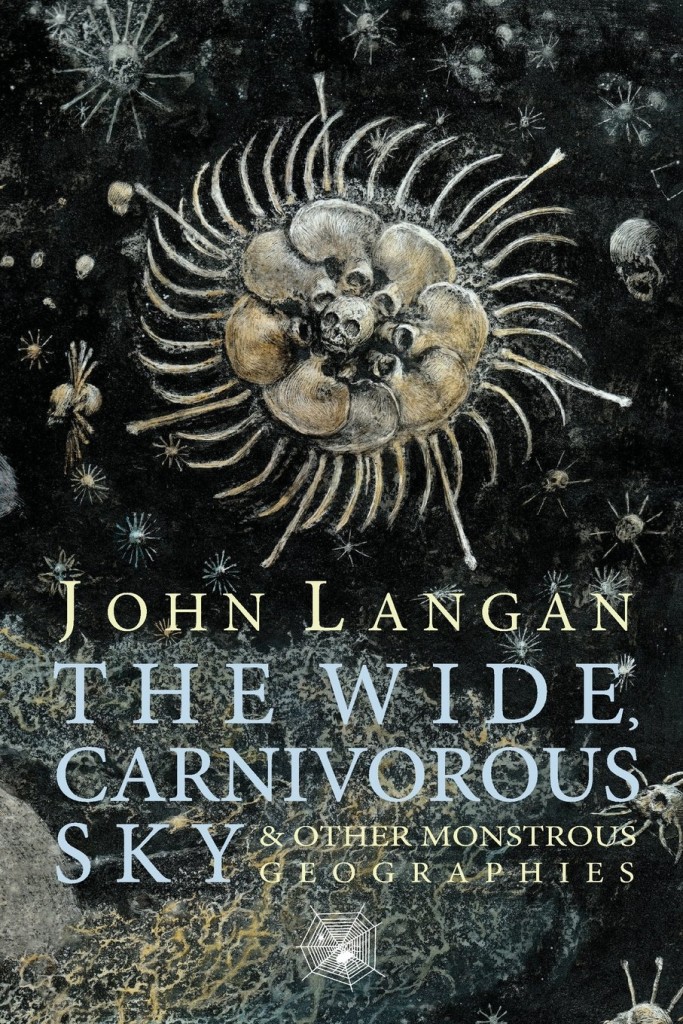
widecarnivorous

I remember hearing in passing that you, sir, are a fan of comic books. What are some of your favorites, and do you think that comics have influenced your work in any way?

Comics played a foundational role in my development, first as a reader, then as a writer. I became interested in comics during the seventies, when Marv Wolfman and Roy Thomas were working on The Amazing Spider-Man and Conan the Barbarian, respectively. I followed Wolfman’s work on Spidey, The Fantastic Four, and then The Teen Titans and Night Force; recently, I picked up the black and white reprints of his and Gene Colan’s Tomb of Dracula. During the later seventies, there were paperback reprints of the first issues of The Amazing Spider-Man and The Fantastic Four, and this introduced me to Stan Lee and Steve Ditko and Jack Kirby. When I was a little older, I discovered Alan Moore’s work on Swamp Thing, which led me to The Watchmen, V for Vendetta, and pretty much anything by Moore I could get my hands on. In more recent years, I’ve been a fan of Gaiman’s Sandman, Mike Carey’s Lucifer and Unwritten, and Bill Willingham’s Fables. The entire run of DC’s Hellblazer was probably my single favorite comic, ever: pretty much every writer who worked on it rose to the occasion and produced some of their best work, ever. Lately, I’ve been reading Eric Powell’s The Goon, which I love for its astonishing, Bernie-Wrightson-esque art, and for the way it swerves wildly between raucous comedy and utter pathos, and the books in the Hellboy universe, especially The B.P.R.D., which seems to me unparalleled in its portrayal of a world dealing with the consequences of an ongoing apocalypse. I could talk about comics all day.
As to how they influenced me: when I was younger, I aspired to work in comics, first as an artist, then as an artist-writer. I think the Marvel comics I was reading when I was very young showed what you could do if you brought a relative degree of realism to your fantastic situations, if your superheroes struggled to balance their private and public lives, if they operated in a world something like ours. At their best, those Marvel books are master-classes in melodrama. Alan Moore’s work built on all of that, deepening the characters’ psychologies and thinking through the implications of their powers and places in the world more thoroughly. Gaiman, Carey, Willingham, and the Mignola crew constructed elaborate mythologies that they followed through long, intricate narratives.

How much of a role do you think where you live has to do with the type of fictional landscape you choose to create?

It would seem it has to have some connection, wouldn’t it? In my own case, I wonder how much my use of the mid-Hudson Valley in my work has to do with the fact that this is where I was living when I started to read those writers who made use of their particular places, Stephen King and William Faulkner (though I’m pretty sure I was planning a comic book set in this region before that, so maybe I’m wrong [or maybe I was responding to Stan Lee et. al.’s use of Manhattan and its environs…])? And yet, there have been places I’ve been to, Glencoe in Scotland, the varied landscape of Kentucky, that struck me the moment I saw them, and that have stuck with me since then. It’s funny, Simon Schama wrote an interesting book, Landscape and Memory, that touches on a couple of these interview questions.

Thanks for stopping by. Long live the Word Horde.

Thank you!

For more on all things John Langan, visit his website, or, better yet, read one (or more) of his books.

An Interview with Nikki Guerlain

Today, Word Horde’s social media maniac Sean M. Thompson talks with one of the preeminent tastemakers of the Bizarro and Weird Fiction scenes, part-time Valkyrie, and darn fine writer, Nikki Guerlain. Here’s what she had to say…

You come upon a pen, and it can only write truth. What do you do with the pen?

It would be super tempting to go all Star Chamber with the pen. That said, I would probably give it to Michael for Valentine’s Day. That would make a great gift, yeah? He’s loads more responsible than I am. I’m sure he would figure out a brilliant way of using it that wouldn’t involve me possibly going to jail.

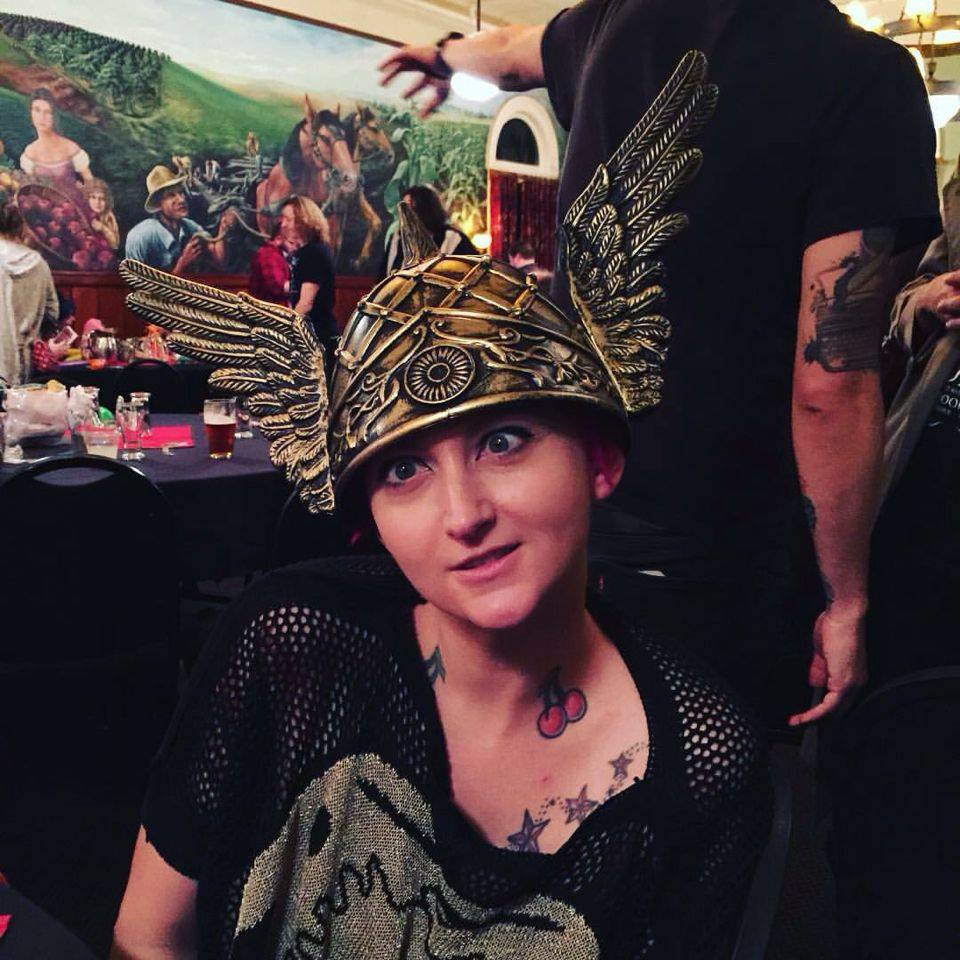
NikkiGuerlain

What role do you feel genre plays in fiction?

Genres are playgrounds. The more playgrounds the better. Categorizing fiction by genre is just a method of bringing the most promising readers to a particular book. It would be interesting to drop genre altogether and categorize fiction by its intended emotional impact. You know, you walk into a bookstore and you tell the clerk, “You know, I want something that will bum me the fuck out.” And the clerk points you to the Bum Me the Fuck Out section and everything from dark fiction to drug addiction memoirs to books on global warming are all there getting cozy with each other just waiting for you to pick one of them up for your much yearned for bad trip.

Of course, this would get extremely complicated and you’d always have readers who fell outside the intended emotional response categories–but these people know who they are and would have no problem finding what section they needed. And hey, while they’re hanging out ironically in the Bum Me the Fuck Out section of the bookstore why don’t you sell them a shirt that says “Nihilism Makes Me Wet” and donate a portion of each shirt sale to the Make a Wish Foundation?

Honestly, if we want to get more readers to books they’ll enjoy without the genre hang ups we’d start using movies and television and other visual media as short hand. You know, like If You Enjoyed X Movie You’ll Likely Enjoy Y Books. We need better, quicker, more evolved ways to communicate the potential experience to the would-be reader than simply genre.

Now I’m thinking I didn’t really answer the question I was asked which is entirely possible. I will say that the idea that literary fiction is somehow better than genre fiction is total shit. Either something is written well or it isn’t. It’s totally gross to be around writers who look down upon other writers for the genre they write in. Eww.

Favorite Tattoo?

I have FUCK tattooed across the knuckles of my right hand. It’s my favorite because it’s been the best ice breaker/litmus test ever. This tattoo has brought many awesome people and conversations into my life. Nothing makes me smile wider than when someone asks me if my right hand really says FUCK.

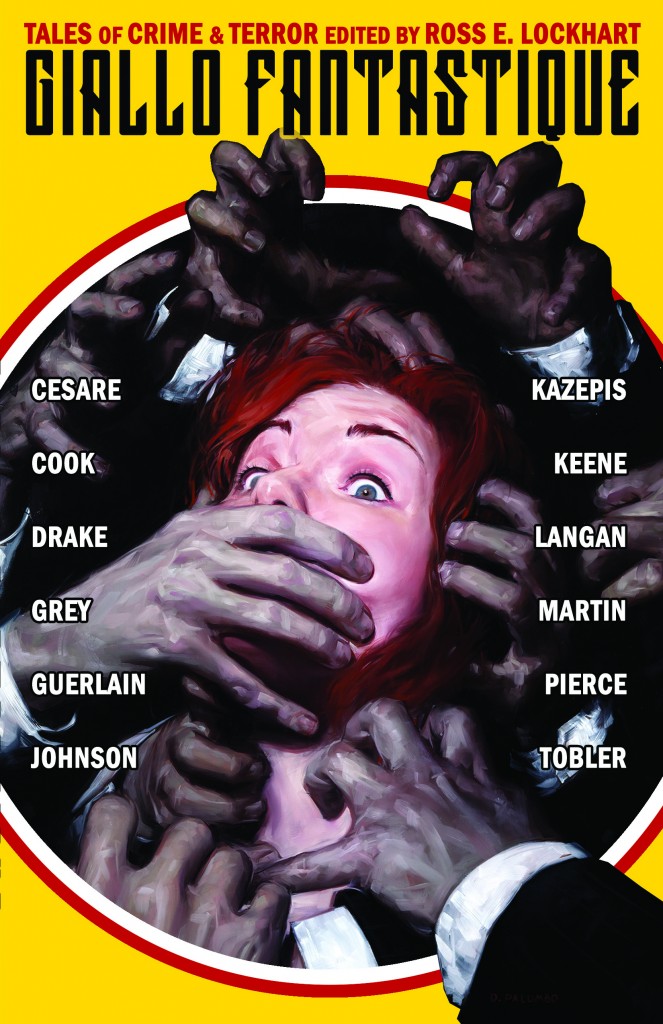
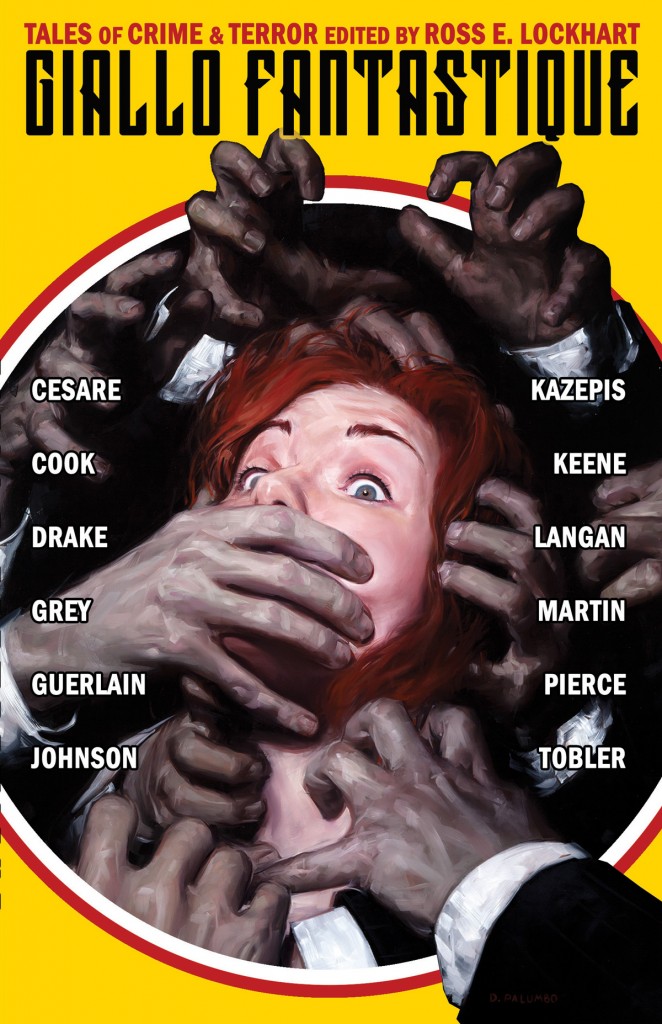
Giallo Fantastique edited by Ross E. Lockhart

Your story from Giallo Fantastique, “Terror in the House of Broken Belles” has a fair amount of eroticism to it, albeit a twisted and deranged sexuality. Do you think that writing about sex is something the bizarro genre embraces over other genres, and if so, why do you think other genres such as, say, weird fiction shy away from sexual themes?

I can only speak for myself and I wouldn’t categorize myself as strictly a bizarro writer. I write fiction that falls in many categories. To me, bizarro is more an attitude–a spirit–than a genre with strict conventions. It has a willingness to play where others might not due to any number of things: taste, propriety, lack of market. Bizarro covers a broad range of work. It can be quiet or quite loud and juvenile. Bizarro does what it wants to and fuck you if you don’t like it–it doesn’t need your approval or respect. That doesn’t mean it doesn’t deserve it. It just means that the writer isn’t fettered by social norms. The work succeeds or fails on its own grounds. Sex is more fully embraced in bizarro than in other genres because the writers aren’t afraid to go there–they’re expected to. It’s a little harder to justify a brekkie bukkake scene with a toaster in “literary” fiction. I mean, you could do it but you’d have to build it up so much and justify it endlessly and it’d take over the entire novel. In bizarro, you can have a brekkie bang and move on with the rest of your day in the space of a couple sentences just like you’d do consuming any normal breakfast. More. Weird. Shit. Faster. Move. Move. Move. Just because the content can be batshit crazy doesn’t mean it’s not written well. Bizarro writers know and trust this. This makes them very free to do whatever it is they want to do which often involves sex.

As far as weird fiction is concerned, I think BIG IF weird fiction writers do shy away from sexual themes it might be because they fear not being taken seriously or it could be that it’s difficult to deal with sex subtly. I don’t think this is the case. I write weird fiction, but in it I have elder gods wearing meatsuits and you better believe there’s going to be a squirrel and a moneyshot and bewbs somewhere in there. Why? Because I I like to play. I want to break any genre I play in. Genres are toys. I want to break them and rebuild them in a way that is mine. I want evolution. I want to piss off the stodgy old guard and usher in the new. I want to show people that there’s room for nearly anything in any genre if written well. Weird fiction is evolving and it comprises more than just a handful of writers that get repeated over and over. Weird fiction and bizarro have a lot in common and I expect that they’ll come to influence each other more and more.

How many gifs do you look at per day?

Oh my gah. I look at maybe a hundred gifs a day. I post a fraction of those. I love gifs because they are moment based. They usually encapsulate a moment or a beat. Other times, they are relaxing meditations. I think the simplicity and brevity of the gif form can have a tremendous impact on someone’s headspace. Gif=play. They have become more important to me and my friends than any of us could have ever imagined.

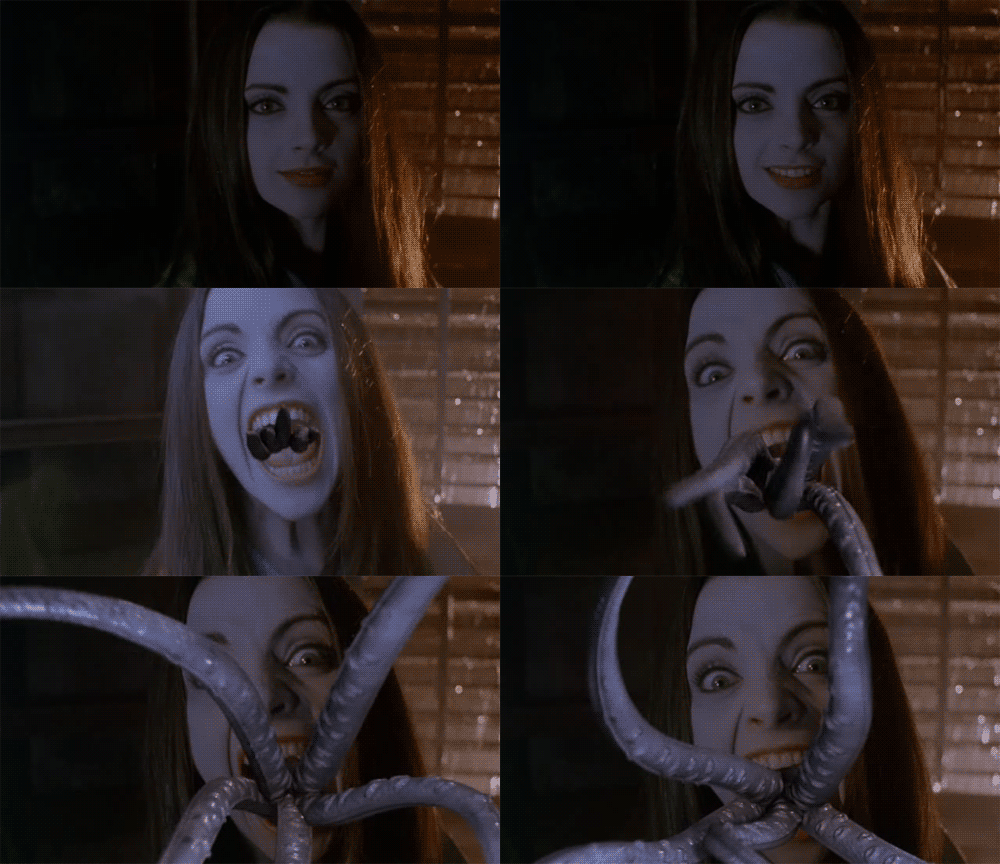
tumblr_m2hqeqfZHc1qjeh4lo1_500

Do you have any writing rituals? Personally I like to smear my shoulders in guacamole, throw on some Stevie Nicks, and take a massive amount of bath salts. The bow tie is of course, optional…

I do have writing rituals. I drink a fuckton of tea, take loads of baths, and usually have a movie or music on in the background. I also do a lot of sprint writing. Fifteen minutes here and there during the day. I write for prolonged periods late at night. I eat a lot of grapefruit when I write. I feel I’m at my best when my mind is loose from sleep deprivation or stimulus overload. 99% of the time I’m stone cold sober during the actual sitting ass in chair part of writing, but I take notes constantly. I write the vast majority of my stuff longhand first so by the time I type, I’m really at a third draft or so. I inhale candy, burn candles, and often write naked. When I get stuck, I do ridiculous things like ask my friends to send me pictures of their dicks in shoes because it’s funny and irreal and brings me back to that “I’m not in reality” headspace I need to write. Writing is serious business but sometimes I have to step back to enjoy it and nothing tells me not to take myself too seriously like an unkempt semi flopped into a Victorian slipper addressed to me me me from a loving and indulgent friend. Oh my gosh. I’ll just stop there.

What is it about working with Ross Lockhart that you find so enjoyable? Is it the advice decreed by his mighty hair?

Working with Ross is amazing because he’s genuine and sincere and he’s got some serious balls to accompany his professionalism. Ross is one of my favorite people on this planet. I will do anything for him. Plus, yes, he has awesome hair.

You got anything to plugeth?

As far as things to plug–I have a few things coming out later this year but I don’t have definite dates so while I have the reader’s attention I would like to point them to the current projects I’m excited about–

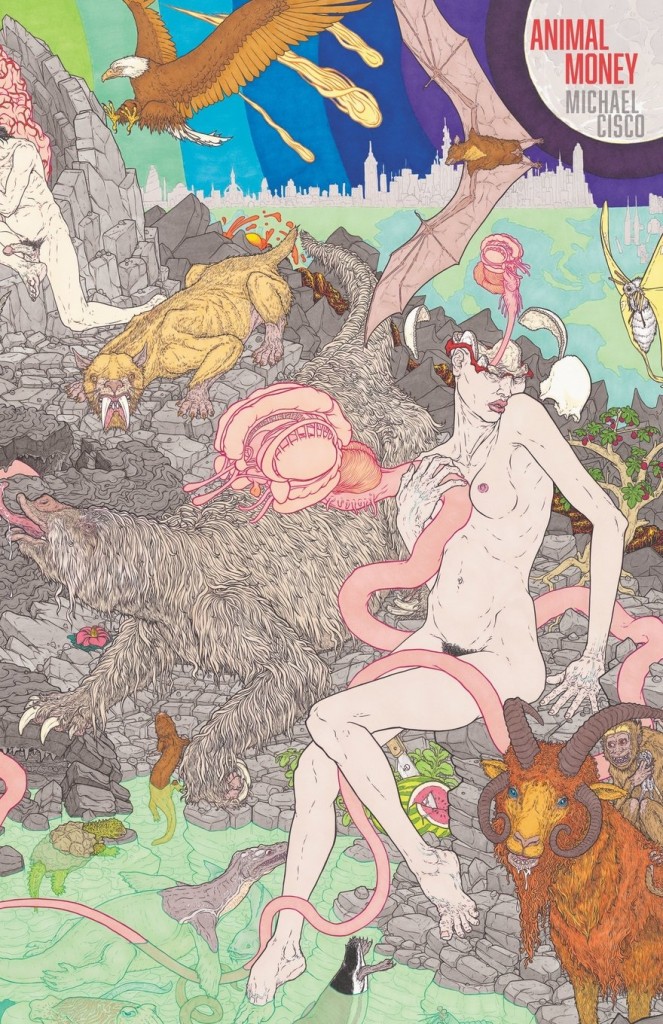
1) Michael Cisco’s Animal Money (Lazy Fascist Press) Yes, he is my honeybunny but only because he is absolutely extraordinary. Also, have you seen the cover?

2) Chesya Burke’s The Strange Crimes of Little Africa (Rothco Press) After listening to Rob Cohen and Christine Roth gush about it, and knowing Chesya is awesome, I’m *totes* excited about digging into this one.

3) Leena Krohn: Collected Fiction edited by Jeff VanderMeer (Cheeky Frawg Press) This one is enormous and I can’t wait to educate myself with it!

Want to help Word Horde prove that weird fiction can be a force for good in the world? Make a donation to a food bank or food-related charity near you, then share the experience on social media using the hashtag #FeedCthulhu. You can score a free e-book of Cthulhu Fhtagn!, plus be entered in a chance to win a signed copy of the book. Plus, through the end of November, you can take 20% of any direct order with Word Horde using the coupon code THANKS. Details here!

An Interview with Michael Cisco

For our latest Word Horde interview, Sean M. Thompson tracked the legendary Weird Fiction author and whiskey aficionado Michael Cisco to his lair, and asked him the following questions…

What do you think the role of genre is in regards to fiction?

Genre is a memory image that gathers together a local micro-canon around a given piece of writing. Reading just about anything, you will see how it repeats settings, phrasings, movement through plot points, and so on, from other writings. This isn’t necessarily copying, though. Where there’s just copying, there really isn’t any new writing there, just another older story poorly recollected. The writing is new not just in what influences it combines, but in that it connects with ideas and impulses from earlier works and extends them. So genre is the landscape a piece of writing uses, but it’s also an orientation.

cisco

Your story from The Children of Old Leech contains a pretty brutal scene with someone breaking their neck after slipping on frozen urine. How did you come up with such a terrible way to die?

It just occurred to me, the right amount of disdain, with a dim echo of Roald Dahl when it came to the melting evidence. It had to be something that could not be attributed to the main character, so that I wouldn’t have to take us on a sidelight through a prison term. Then again, that might have turned out better than what I did.

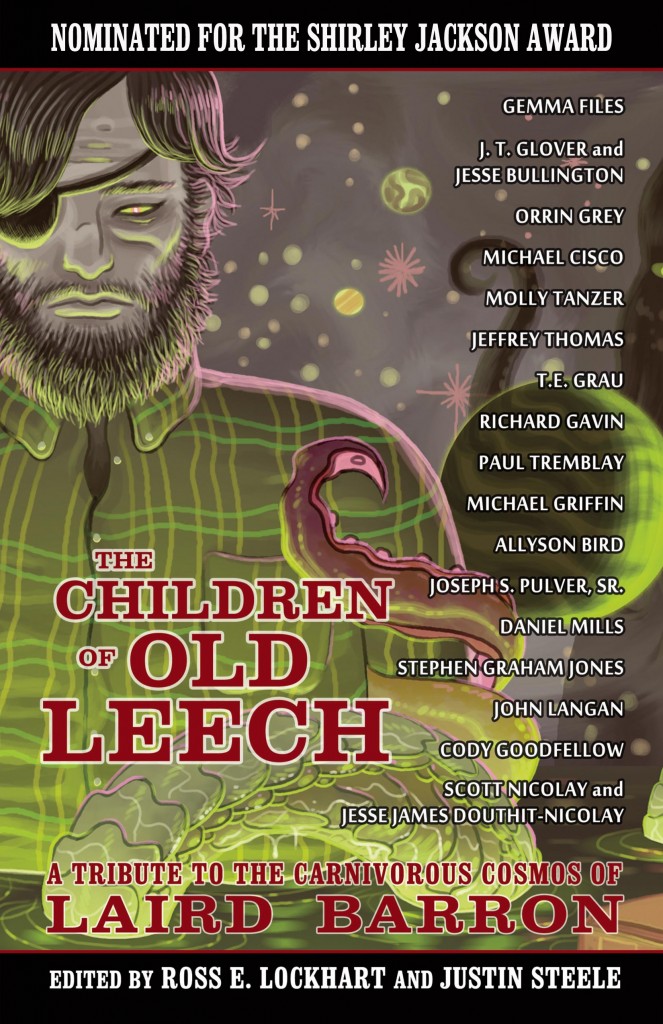
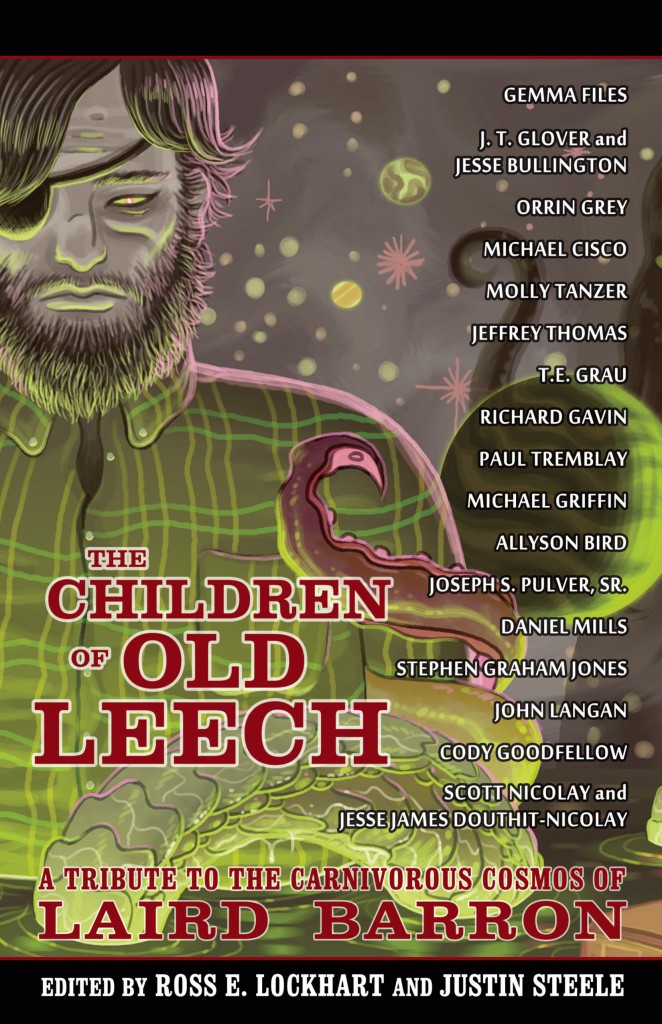
The Children of Old Leech: A Tribute to the Carnivorous Cosmos of Laird Barron

Do you find yourself gravitating to any theme over and over again in your fictional output?

Decay, delirium, some kind of altered monasticism, self-conscious writing and a sort of paranoid universe. Generally I’m looking for ways to invert what seem to me to be common sense notions about things, so I would be looking for a way to make decay or delirium affirmative. That’s difficult to the extent that so much horror fiction valorizes what’s normal.

Do you get up to a lot of stuff of Halloween?

Not really, not any more. I would like to, but all I really manage to do is carve a pumpkin and watch a few movies, read a few stories.

What’s the scariest thing you can remember happening to you this year?

Air turbulence. I don’t fear crashing, but I do fear sudden plunges.

Do you have any writing rituals?

All of writing is a ritual for me. Generally, I listen to music before writing, taking notes if anything occurs to me. I don’t write on days when I have to go to work, because I don’t want to write with any distractions or fatigue. I wear earplugs when I write, but then I live in New York City. And I don’t sit there waiting to find something to say. I write what I have to write, then quit.

Do you believe in the supernatural?

I don’t believe that there is anything beyond or external to nature. I do believe that nature itself is in a continual state of change, and not a body of fixed rules. I don’t like to see anything impinge on the imagination or the reason, so rather than take a censorious view of the supernatural, I would rather think about it. This has been the thrust of what academic work I’ve been able to do.

If you could impart any advice on aspiring writers, what would it be?

Your problems are worth more than your answers. When a compositional or conceptual problem arises as you write, you’ve just found what you were really writing about. Include the problem in the writing. The problem is the motor.

CiscoAnimalMoney

Michael Cisco’s latest is Animal Money, out now from Lazy Fascist Press.

Want to help Word Horde prove that weird fiction can be a force for good in the world? Make a donation to a food bank or food-related charity near you, then share the experience on social media using the hashtag #FeedCthulhu. You can score a free e-book of Cthulhu Fhtagn!, plus be entered in a chance to win a signed copy of the book. Plus, through the end of November, you can take 20% of any direct order with Word Horde using the coupon code THANKS. Details here!

The Return of #FeedCthulhu / Saying Thanks

One week from today is Thanksgiving in the United States, a holiday which we celebrate by gathering together, sharing food, and saying thanks. This year, I’ve got a lot to be thankful for, because you’ve helped Word Horde succeed in its most ambitious year yet. We published five books this year: Molly Tanzer’s weird western, Vermilion; Nicole Cushing’s ultra-dark delve, Mr. Suicide; Orrin Grey’s captivating collection, Painted Monsters & Other Strange Beasts, and the anthologies Giallo Fantastique and Cthulhu Fhtagn! So, to celebrate this success, and to give back, I’ve decided it’s time for The Return of #FeedCthulhu.

In 2011, when my first anthology, The Book of Cthulhu, was published, I challenged readers to make a donation to a local food charity, and to share news of that donation on Twitter, using the hashtag #FeedCthulhu. That year, we raised several hundred dollars in pledges across the country to local food banks and homeless shelters. In 2012, to accompany the publication of The Book of Cthulhu 2, we repeated the challenge, raising over a thousand dollars worth of pledges.

Thanksgiving may be the time to celebrate our prosperity and providence, but people still go hungry. And hunger sucks. So once again I’d like to challenge you to make a difference, by making a donation–no matter how small–to a food charity. This can be a local food bank, church, temple, mosque, coven, bin outside your grocery store, or national (or international) hunger relief organization. The organization doesn’t matter, so long as they’re feeding people. Once you do that, post the following on social media:

I fed Cthulhu [your donation] to [organization] #FeedCthulhu @lossrockhart

Don’t forget to include the hashtag (#FeedCthulhu) and my Twitter handle (@lossrockhart) so that I can see–and share–your post. Also, if you send a link to your post via email to publicity[at]wordhorde[dot]com, in return for your generosity, I’ll send you the ebook of my latest anthology, Cthulhu Fhtagn!. Just let me know if you’d prefer ePub, mobi, or PDF format. I’ll be checking social media for the hashtag, and on December 1, I’ll be selecting three random posters, who will receive a personalized autographed copy of Cthulhu Fhtagn!

2015-09-03 266
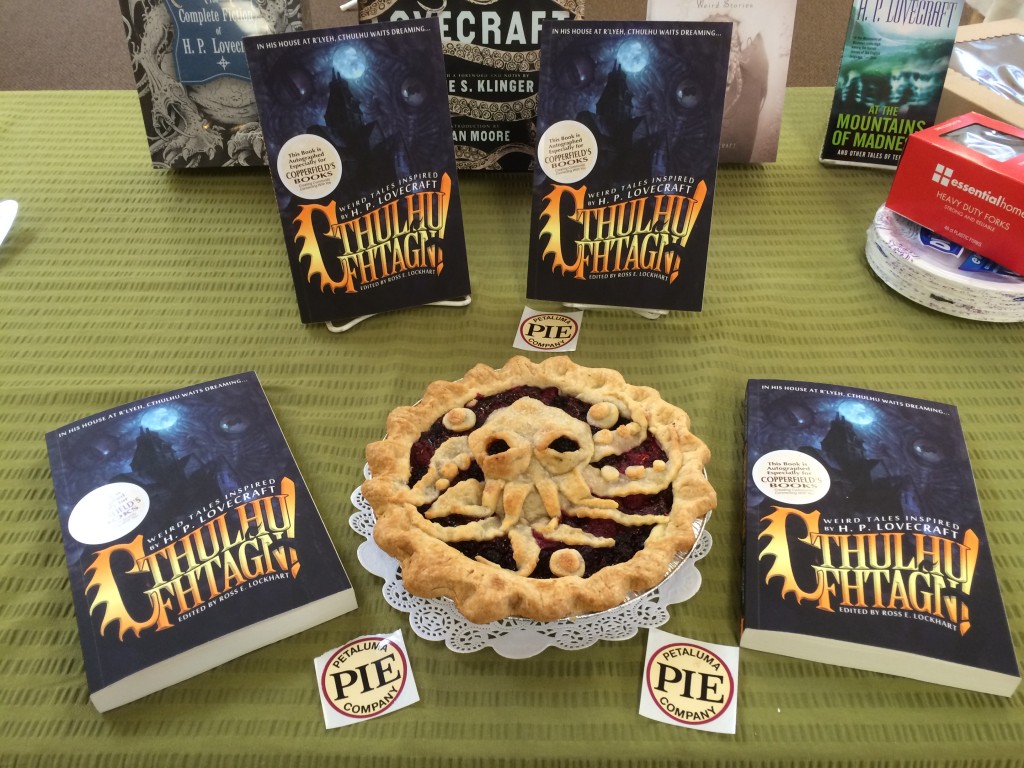
“Pie is my favourite dessert, and blueberry (for summer) and mince (for winter) are my preferred kinds—with apple as a good all-year-round third. Like to take vanilla ice cream with apple and blueberry pie.” –H. P. Lovecraft to Robert E. Howard (7 November 1932)

And for dessert, I’d also like to say thanks to you by making you a special offer. Place an order with Word Horde between now and the end of November, use the coupon code THANKS, and take 20% off your purchase. It’s our way of saying “Thank you!” for a great year, and encouraging you to give Word Horde books to your cool friends this holiday season.

An Interview with Anya Martin

Word Horde’s resident social media maniac, Sean M. Thompson, recently chatted with one of our favorite authors, Anya Martin, whose work has appeared in Giallo Fantastique and Cthulhu Fhtagn! Here’s what Anya had to say…

What do you think the role of genre is in fiction?

That’s a tough one in that like most writers I both hate being placed in a genre box, and yet I am a fierce defender of the claim that spec-lit in all its forms (SF/F/H, etc.) has every bit of legitimacy as literary fiction. I tend to prefer “mode” to “genre” and see the different forms of spec-lit as freeing me to approach realistic topics more, rather than less directly through a fantastic lens. For example in “The Prince of Lyghes,” my story in Cthulhu Fhtagn!, I consciously tackled the destructive impact of alcoholism on a relationship through the mode of Weird horror. The story begins monotonously because the daily life in such a relationship tends towards a constant, creeping dread, but the mode of the Weird allows me to push further into the emotional horror of that daily Hell by giving it a physical manifestation.

I’ll add that I never set out to be a Weird fiction writer per se, but since the recent ascent of the Weird, I have had an easier time selling my work. Before that, I was often told that it didn’t fit. It’d be nice to dream of a day when all books are shelved together and genres don’t matter, but genre classification is also a marketing reality that writers have to live with if they want to be published. Right now, I am fortunate in that editors and publishers seem to be more open to the type of whatever genre I write, whether Weird, horror, dark fantasy, or magic realism. I haven’t written a story I consider explicitly science fiction since “Courage of the Lion Tamer” (Daybreak, 2009), but I grew up loving science fiction and “Sensoria” in Giallo Fantastique actually started as a science fiction story. But that’s another story.

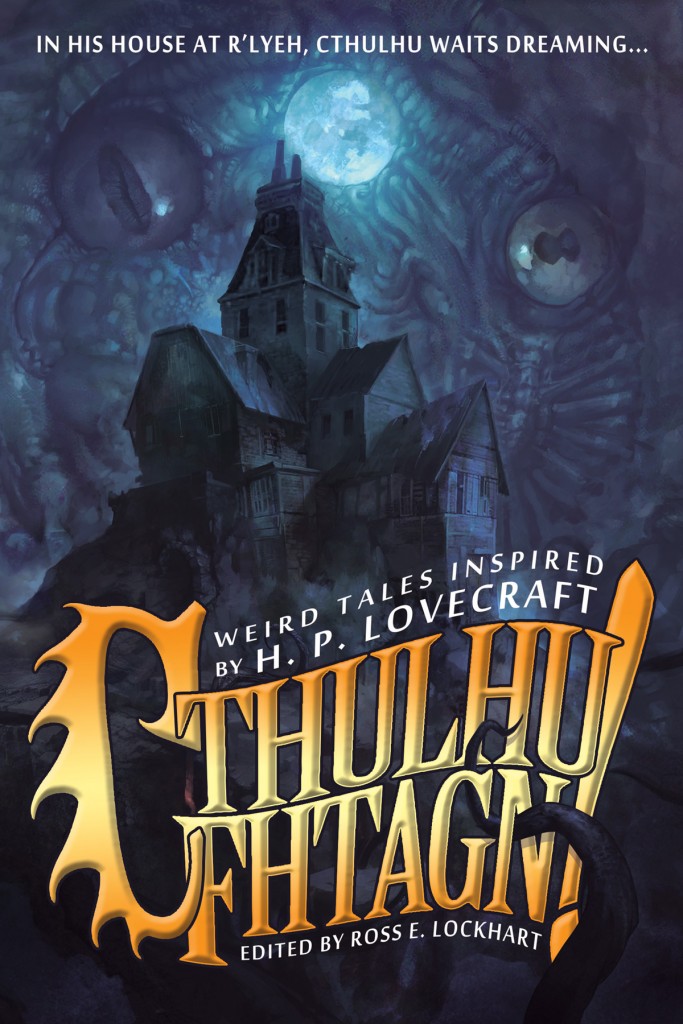
Cthulhu Fhtagn! edited by Ross E. Lockhart

Your story from Giallo Fantastique, “Sensoria,” contained a drug primarily taken at a rock and roll show. What kind of influence does music have on your writing, and have you been to a lot of concerts in your life?

I listen to music constantly, though I stick to instrumental when I am actually writing. A lot of experimental jazz, funk, Krautrock recently filling in gaps because I was such a punk rock girl. My punk/post-punk roots are still on my daily playlist–Patti Smith, the Velvet Underground, Lou Reed, John Cale, Bowie, Eno, Iggy, Ramones, Robyn Hitchcock, Pere Ubu, Wire, The Cramps, to name just a few. And yes, I have been to a fair amount of concerts from local bands to international acts, though not so many stadium-sized shows as I tend to prefer more obscure music. I was also a college radio DJ and music director. I named my show Dangerous Visions.

Music is more of a subliminal than a direct influence in most of my work, though my characters are often listening to music. However, as chance would have it through anthology invitations, I had two stories come out this year in which rock music was integral–”Sensoria” and “Resonator Superstar!” in Scott R. Jones’ Resonator anthology which explores a possible occult side to Andy Warhol’s Exploding Plastic Inevitable light/film shows accompanying early Velvet Underground gigs. The latter took a considerable amount of research and came out of attending a re-creation of that experience by a local avant garde film group in Atlanta. I actually wrote the first draft of what would become “Sensoria” around 1990, but its final form was heavily influenced by Goblin and Fabio Frizzi concerts–the latter in a London church on Halloween in 2014. So, OK, yes, my concert experiences, I guess, do bleed directly into my writing. I’m not working on any explicitly music scene stories right now, or wait, I just remembered the novel I am probably writing as my first might have something to do with a dead rock star.

Giallo Fantastique edited by Ross E. Lockhart

Do you have any writing rituals?

Well, as aforementioned, I do listen to music either before and/or while writing. Otherwise they fluctuate. In the winter, I’ll often drink green or camomile tea depending on whether I need a caffeine lift. I do coffee in the morning but that’s my nonfiction journalism day job time. For “Sensoria,” “Resonator Superstar!” and other stories that I need to tap into a more intense trance state especially as I get near the climax, I have drunk Kava. Some stories come together better in bed with my laptop with scented candles lit, and others sitting at my computer desk–I’m not sure why other than needing a change of scenery. I do usually prefer writing alone rather than in a public place like a coffee shop.

Would you ever eat a bug?

I have eaten bugs! Dried seasoned grasshoppers and still not sure whether those were caterpillars in the soup in China. Also more recently at a natural history museum insect-tasting event, but I can’t remember what kind of insects they were now.

Have you ever written a novel?

I have started novels but have not finished one yet. One in particular keeps knocking around in my brain. It seems manageable in length, I haven’t read anything else like it and fortunately the concept seems saleable. I hope to pick it up again sometime soon, but not until after a novella and I finish up at least three more short stories for anthology invitations.

How do you deal with fear of failure?

I just try not to think about it and keep working. Get the story done and move on to the next one. My brain may be a little too good at compartmentalizing, which is something I may tackle in a future story. On the other hand, right now I also try to keep my fiction goals modest. Get a few more stories completed and sold, see how my work is received, and then hopefully someone will want to collect them. And in due time, hopefully this winter, novel.

Would you consider yourself a fast writer, or a slow writer, in terms of your output.

Haha! Both. I tend to write very rapidly once a story gets going and have been known to complete a story in a day to a week. But I’ll start other stories and there could be long gaps of time as the parts come together in my head. “Resonator Superstar!” and “Old Tsah-Hov” in Cassilda’s Song (edited by Joe Pulver, Chaosium) were both written in two weeks or less, but “The Prince of Lyghes” evolved over three years and even when I thought it was done, I made more changes after a beta reader hit upon something simple and missing that should have been obvious to me.

Thanks for taking part. Anything to plug?

You’re welcome. I do have two more works slated to come out this year–making it a total of six in 2015. My short story, “A Girl in Her Dog,” will be in Issue #2 of Xynobis from Dunhams Manor Press. And Dunhams Manor is also publishing a one-act Weird play called “Passage to the Dreamtime” in its chapbook series. It’ll be the first time a work of fiction by me will be published in a freestanding format, i.e. not in an anthology or magazine, so I’m pretty excited.

An interview with Silvia Moreno-Garcia

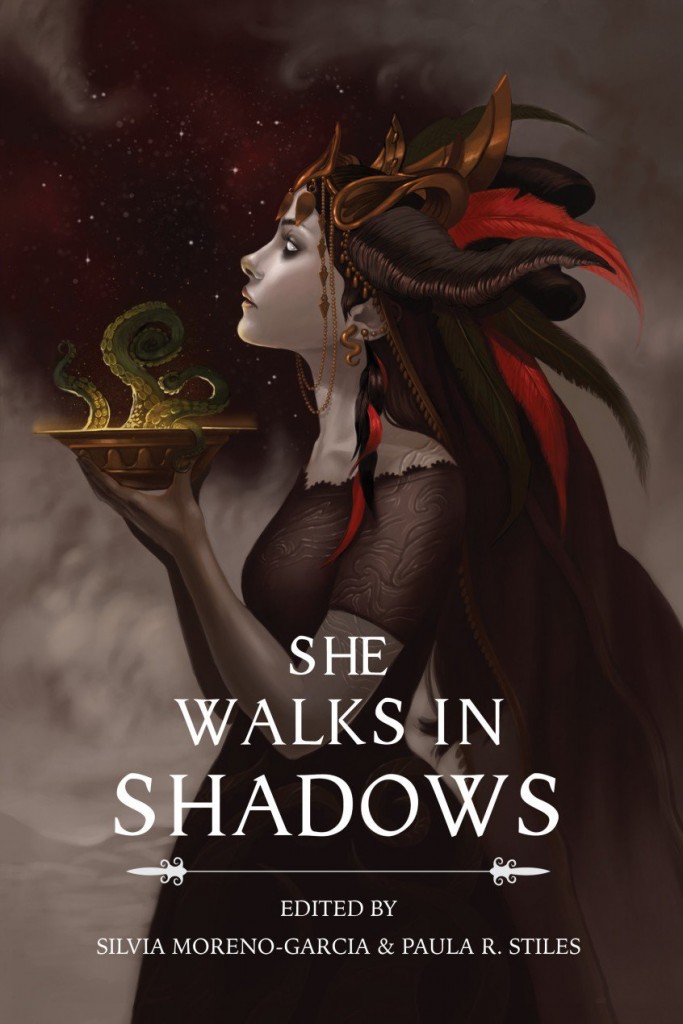
Our intrepid reporter, Sean M. Thompson, recently sat down with one of our favorite authors and editors, Silvia Moreno-Garcia of Innsmouth Free Press, to talk about her latest anthology, the all-women Lovecraftian anthology, She Walks in Shadows (which we at Word Horde are big fans of). Here’s their conversation…

In your own words, why do you think it’s important for there to be weird fiction (or really any type of genre) collections featuring work exclusively by women?

In the horror genre, and that includes Weird fiction, women don’t seem to get much attention. Whenever there are lists of Top Ten Horror Writers people remember to include folks like King, Lovecraft, yet even figures as crucial as Jackson can slip through the cracks and be ignored. Some anthologies routinely used to include only all men in their TOCs, I’m thinking of several Lovecraftian books which did this not even five years ago. So, there’s a complex problem. Yes, there are less women horror writers than men. But the ones we have can have a hard time drawing attention. And how do we get more women interested in the genre? In creating and consuming and being part of it, that’s not an easy thing to do but part of it must be visibility. Anthologies can help highlight the work of women which we don’t see, but I should say it’s not the only way this should be done, nor is it an instant solution to get more women interested in the field.

shewalksinshadows2-846x1269

What prompted you to start the process of creating She Walks in Shadows? Was the turn around faster or slower than other editing work you’ve had?

There was a Facebook discussion where someone asked “Do girls just not like to play with squids?” By squids the person meant Lovecraftian stories, there was the assumption there are no women writing it because it doesn’t interest them. There was a long discussion about this on several spaces. At some point someone said women were incapable of writing Lovecraftiana and at another point someone said if you want something different, why don’t you do it yourself. So we did. Of course then some people got mad that we actually were action-oriented and not just talk, but that’s another story.

You have a story in Word Horde’s Tales of Jack the Ripper. Does the Ripper case interest you? Are there any other murder cases that you find yourself terrified by/ intrigued by?

The Ripper is one of the cases I find more dull, in comparison to others because it’s not as bizarre as some other stuff I’ve read. I’m interested in crime, not just murder, and I’ve read a lot of nota roja, yellow journalism, and crime books. I’m curious about people and I like knowing about the investigators, the criminal, the victim. There was a case in Mexico City in the 50s which I find quite interesting and apparently I’m not the only one since they made it into a play and a movie. Basically this guy had a whole family, six kids and a wife, and he kept them locked inside his home all the time. They never went out. They made a living by making rat poison and the father went selling it door to door. And you think for sure they’re going to murder him with rat poison! But they don’t. A daughter throws a scrap of paper onto the street and eventually the cops come and take the guy to prison. But the things that gets me, the thing I go over and over again in my head, is the mother. After the guy goes to jail she says she still loves him and wants him back.

It’s just strange, the bizarre shit that can be going on behind a perfectly normal looking house.

What kind of music did you listen to today?

Today? 80s music. I had “Mad World” playing.

How goes your dissertation?

Half there. I need to re-write a portion of it but getting there.

Do you think there are certain place which contain some type of power we can’t explain? You hear people talk about, say, The Bermuda Triangle, and no one can quite pin down why so many ships disappear in that area?

I don’t believe in ghosts or monsters or demons. But my great-grandmother was superstitious and I grew up with that, so it’s hard to scrub it off even when you are an adult. I also lived for a bit in Massachusetts and you’re from there so you know what it’s like. A lot of old houses and this kind of sad, depressing feeling in certain spots. There’s a lot of history in certain places, in New England, in Mexico, in Europe of course. And it feels different than the ‘new’ cities like Vancouver where everything is glass, it’s clean, and there’s an optimism which seems to flow from this youth. That said there was a place in Vancouver my husband and I found creepy. We would walk by a building which had been a hospital and was abandoned and we both swore the building was staring at us. It would follow you. And it looked angry. They turned it into condos and it looks very fine now, nothing like it did before, but I don’t think I’d live there. It’s not scientific at all but that building was a nasty building.

Growing up, were there any creepy areas around Mexico City you thought might contain some type of unexplainable forces?

There are a lot of creepy places but I was never afraid of ghosts or the supernatural in Mexico City. My fears were very concrete and very real. Would I get mugged, for example. As a child there used to be some weird knocking in my home. Knocking on the walls. It was made of brick, so it wasn’t like in the US or Canada where you can safely assume the wood is contracting, the floorboards are making noises, it was this knocking that happened when I saw in one room. I’m sure there is a natural explanation but when it bothered me a lot I would yell. I would say “Shut up! Stop!” I figured if it was a ghost it was motherfucking rude ghost and it deserved to be told off. And the noise did subside after I yelled. But I was never afraid. The ‘real’ world was a lot more scary.

Do you have any writing rituals? Molly Tanzer has some very specific ones…

No. I write late at night because it’s the only spare time I have.

What do you feel the role of genre is in regards to fiction?

Does it have to have one? You use whatever tools do the job. Sometimes its genre, sometimes its lit.

Order She Walks in Shadows from Innsmouth Free Press. Order Tales of Jack the Ripper from Word Horde. Silvia’s debut novel, Signal to Noise, is available from Solaris. To learn more about Silvia Moreno Garcia and her awesome projects, visit her website.

Review Round-Up: Cthulhu Fhtagn!

Here are just a few of the critical raves our latest anthology, Cthulhu Fhtagn!, has been receiving:

“…if R’lyeh isn’t rising fast enough for you, if clammy, webbed-handed fishbelly-white figures aren’t circling your house, and the stars aren’t winking out just yet, the Cthulhu Fhtagn! anthology will get you through until the madness begins.” —Marion Deeds, Fantasy Literature

“A new, and highly personal, take on the legacy of the Cthulhu Mythos emerges shuddering and gibbering from the R’lyehian depths in the bloated tentacular shape of Cthulhu Fhtagn!, conceived and collated by Ross E. Lockhart, whose stature as an anthologist and creator of The Book of Cthulhu I and II, Tales of Jack the Ripper, and The Children of Old Leech, approaches legendary proportions. And here are 19 examples of Cthulhoid weird filtered through his own unique perspective.” —Paul St. John Mackintosh, TeleRead

“These are all Lovecraftian stories, then, even if more than a few of them, this many generations hence, have moved well past the tropes and conventions the Old Man developed. This book shows us some of the best that pastiche, tribute, and evolution of the Lovecraftian Weird Tale can offer.” —Jonathan Raab, Muzzleland Press

“…a collection of dark stories that Lovecraft himself would be thrilled to read. If you are a fan of terrifying short stories, this is a book you will want to pick up immediately.” —Matthew Scott Baker, Shattered Ravings

Cthulhu Fhtagn! edited by Ross E. Lockhart

Pick up a copy of Cthulhu Fhtagn! for yourself. Or, if you’re a reviewer, drop publicity[at]wordhorde[dot]com an email and request an electronic review copy today!

An interview with Bram Stoker Award-winning author Laird Barron

Sean M. Thompson recently sat down with Laird Barron, the Bram Stoker Award-winning author who inspired our Shirley Jackson Award-nominated anthology The Children of Old Leech: A Tribute to the Carnivorous Cosmos of Laird Barron, to ask him a few questions.

How did it feel to hear that Ross and Word Horde wanted to publish a collection in homage to your work?

I wasn’t keen on it initially. However, I trust Ross. He and Justin Steele worked hard to put the anthology together and avoid pastiche. The contributing authors wrote great stories. It was a humbling experience and altogether fascinating to see what bits and pieces of my universe they responded to. The anthology succeeded, so all’s well, et cetera.

SJA_9781939905079_covSM

What do you think the role of genre is in fiction?

Genre is a default, a convention. You start with horror as a broad concept and that’s genre. Then you subdivide and subdivide, or you strike out into other territory. For an author, it’s the beginning of a conversation. For editors and publishers and booksellers, it’s often the end of a conversation.

What scares you?

My dog stood at the top of the steps yesterday, deciding. After a while she limped down and we went outside. She trotted around the yard once, then collapsed in a patch of sun and looked at me and panted. Her eyes are getting a blue tint and her face is going white. I couldn’t egg her into playing like we used to do. Back in the house, she drank some water, curled up on the couch in my office and began to snore. I sat for a long time, adding the numbers, moving them around, looking for loopholes—people years versus dog years, what I have got left versus what she has left. I couldn’t make it add up to anything equitable.

Do you have anything in particular you like to do during the fall season?

Late August through October is my favorite stretch of the year. As I write this, I’m living in the countryside in the Hudson Valley. There are massive stands of sycamore around the house, a dairy farm across the road, and farther on, fields, streams and foothills of the Catskills. Way back in the day, this was the season I’d return home from the cannery or salmon processor and start cart training my team of sled dogs. I’d hook them up to my old Ford truck or a four-wheeler and we’d cruise for miles on back country roads. These days, long walks through farmland suffices, but I admit, the smell of September dampness and cold dirt still gets me.

Would you consider a hip, new iteration of your infamous cosmic monster-deity: Young Leechy?

I think the Cartoon Network should be brought in on this.

What’s your favorite dog from a novel?

Buck from The Call of the Wild. I’m also partial to Blood from A Boy and His Dog.

What’s the scariest part of where you currently reside in upstate New York? Is it John Langan’s bear hugs? (optional to answer second part of question)

I am nimble enough to evade John’s bear hugs. It’s between him and Paul Tremblay now.

Nothing is particularly scary about the Hudson Valley, although I have a lot of exploring to do. Closing in on four years since I moved here from the west. The geography (old towns surrounded by dense forest; mountains, rivers, caves…) appeals to me as does the rich history. There’s a distinct sense of wildness at the edge of civilization. It will influence my writing in years to come. And I hope some of that will be scary.

Garrett Cook reads “Hello, Handsome” from Giallo Fantastique

Today is September 30, the 127th anniversary of one of the most brutal and audacious crimes in history, the Jack the Ripper murders known as the Double Event. The first Word Horde anthology, Tales of Jack the Ripper, explored this terrible crime in horrific detail, contemplating in multiple stories just what it is that drives someone to murder. Is it something within? Or is it something else entirely?

And so, as summer turns to fall and Halloween approaches, we thought we’d share a tale of murder and mayhem with you all. One that confronts that question head-on. With gloves off. Or on, as the case may be. Here is Garrett Cook’s “Hello, Handsome,” from Giallo Fantastique. Read live, with musical accompaniment by Erin Jane Laroue. Turn down the lights, sit back, and get ready for terror.

Photo by Nick Giampetro

Photo of Garrett Cook and Erin Jane Laroue courtesy of Nick Giampetro. Recorded live at The Hour that Stretches at the Jade Lounge, Portland, OR. Special thanks to Edward Morris.

Giallo Fantastique edited by Ross E. Lockhart

Click here to listen.

An interview with J. M. McDermott, author of We Leave Together

Recently, Sean M. Thompson had a chance to talk with J. M. McDermott about his Dogsland novel, We Leave Together.

For the readers who might not be aware, tell us about your fantasy series, the third book of which in the series is We Leave Together?

I lost an uncle many, many years ago to HIV. He was gay. As an adult, years later, right around 2005, 2006, I was living in Euless, TX. The Hurst-Euless-Bedford Metroplex was not exactly always a place that was very friendly to people who were not part of the mainstream religious right of our culture, in the places where I often found myself among the bookstores and bars and coffee shops. Creationism was openly contested and scoffed upon. Megachurches that spouted hate from the pulpit and contested science grew and grew, with evangelists all over trying to pull more people in.

When dating someone, I’d casually bring up Creationism in conversation as a form of self-protection against destructive anti-Science ideologies.

At the time, I imagined what it must be like to be gay in a world openly hostile to that way of being, and having to stay sort of hidden about it. Going to work, going to the store, going home, and always with the specter of the revelation containing an edge of potential violence: verbal abuse or even genuine, physical danger — and God save the transgendered person discovered in parts of that town!

I imagined back into history, and across history, where for so long so many people didn’t even have the word to express what they felt about other people, knowing only the fear of being discovered. I imagined the police officers going around and raiding gay bars, beating up homeless gay and lesbian people who had been kicked out of their homes — rendered homeless — for just being themselves. People around me at the time — not my friends, mind, just people — talked openly with such pride in their voice about the poison of homosexuality and all sorts of awful, spitefulness. And, they talked this way while the very people they openly reviled were probably just a few tables down in the coffee shops, going to a different, more tolerant church around the corner, and/or sitting at the edge of the bar. Hatred is such an awful thing. I hate hatred.

So, I can go on at length about this, because this subject can piss me off something fierce, and I carried that anger quietly for a long time. My uncle was a good person, and he didn’t deserve to be called all kinds of poison, and he didn’t deserve to die of such a poison as that awful disease, and to be separated from his family and community because of their hatred of him. He passed in ‘93, when I was just 13, and I was only just learning the meaning of the word that people called him in my cloistered childhood. Again, as an adult and an author, that was in the neighborhood of 2005, 2006, gay marriage was not even something the average person would know about, much less consider viable to become a law of this land. Tolerance was just not the way things were done, then, for a large portion of our country. It wasn’t even imagined. The only thing that was imagined was the evil and sin of the orientation.

I figured with fantasy I could make this imaginary poison real. I could invent a world where there were people who actually had this poison in them as infectious as others seem to think the gay is, in its way. And, as I would reveal in the books, it wouldn’t matter if the demon stain was real, because they’d still be humans. As well, treating people like monsters has a great way of creating monsters out of people. I thought about the larger message of tolerance, and injustice, and how cities and communities eat themselves, and how it is all connected in cycles of misery and suffering.

I thought that if I wrote about two gay men in love, the people who most need to read about the humanity of the other would assume the book wasn’t for them. So, I wrote a heterosexual love story, instead, with Jona, the disgraced lord of a noble house fallen into poverty and ruin, and a Rachel Nolander, a mystic woman who never believes that she will find peace, much less love. Both carry a stain that makes the very blood and sweat and tears of them a toxin to everyone around them. I wrote about the city that eats their poor, as the large cities of Texas do. I wrote about a lot of things that angered me that I saw in the world around me. I wrote about nature and the city and the relationship between what is natural and what is cultural.

WLT_FCover_300dpi

What do you think the role of genre is in fiction?

I don’t know in the slightest, and the older I get, the less I know.

Do you consider yourself a spiritual person?

Whenever I take D&D personality tests, and I’ve taken a few, I actually test as a True Neutral Druid nine out of ten, and a True Neutral Monk, for that lingering one.

Beyond that, I will say only ‘Yes’.

How long did it take you to write We Leave Together? Have you ever had a faster turn around on a book you’ve written?

I don’t remember.

I prefer to forget as much as possible about the books that I have written, because it makes it more likely that I will write another one. It is like going to the dentist. If I think about the procedures too much, I’ll never go back.

I also try to write a new kind of book every time, to make sure I don’t write the same things over and over. Every new book is starting over brand new, and I learn how to write again every time.

Who are some of the writers that you admire?

Lately, I have been enthralled with Julian Graq, Haldor Laxness, and Zachary Jernigan. I am writing a lot of science fiction, of late, and I have a very difficult time, I feel, escaping the shadow that Maureen McHugh spreads across my imagined futures.

If demons existed, what do you think their end game would be on Earth?

Demons exist on earth, but we don’t call them that. Daemons of pure energy, pure sin, that exist only to consume and corrupt are here. They have no corporeal form, but they pollute the corporeal with their energy and corruption of human will. We call them corporations, and I think the end game is consumption of all things, a sort of uber-monopolistic entity that touches every industry, extracting everything from them, where the system of extraction is more important than the people who live and work inside the system.

I have written about this twice, in fact. In the short story ‘Hestia’ in my collection Women and Monsters, the only way to preserve endangered species and homeless men is to devour them and turn them into shit. In my novel, Straggletaggle, the end game of industry is splayed out, a perfect rule of corporate law and efficiency, devouring everything until nothing is left of man and soul and green grass and birdsong, and it is the most terrible and frightening thing in the world.

Corporations are daemonic. They don’t have to be evil, but self-interest and self-interested actors make them so far too often for my taste and comfort.

What are you working on currently?

I am nearly finished with a deep space colony of quantum clones, and their unillustrious Astral Navigator. It is a novella heavily influenced by The Opposing Shore by Julian Graq, and The Tartar Steppe by Dino Buzzati. In my opinion, much of military science fiction details very exciting things, and much of the actual experience of most military personnel is terribly dull and sort of theatrical in nature, pretending to be at war, or pretending to be warriors, so to speak. The vast majority of soldiers never even fire an epithet, much less a gun, in the direction of an enemy. I thought I should write a military science fiction piece about that, for a change.